
Issue #45 · Weekly Digest
Weekly AI Dev News Digest: November 8 - November 13, 2026
Anthropic heads for Nasdaq with $70.7 billion due within a year. A global Microsoft 365 outage disrupts Outlook, Teams, Copilot, and AI connectors.
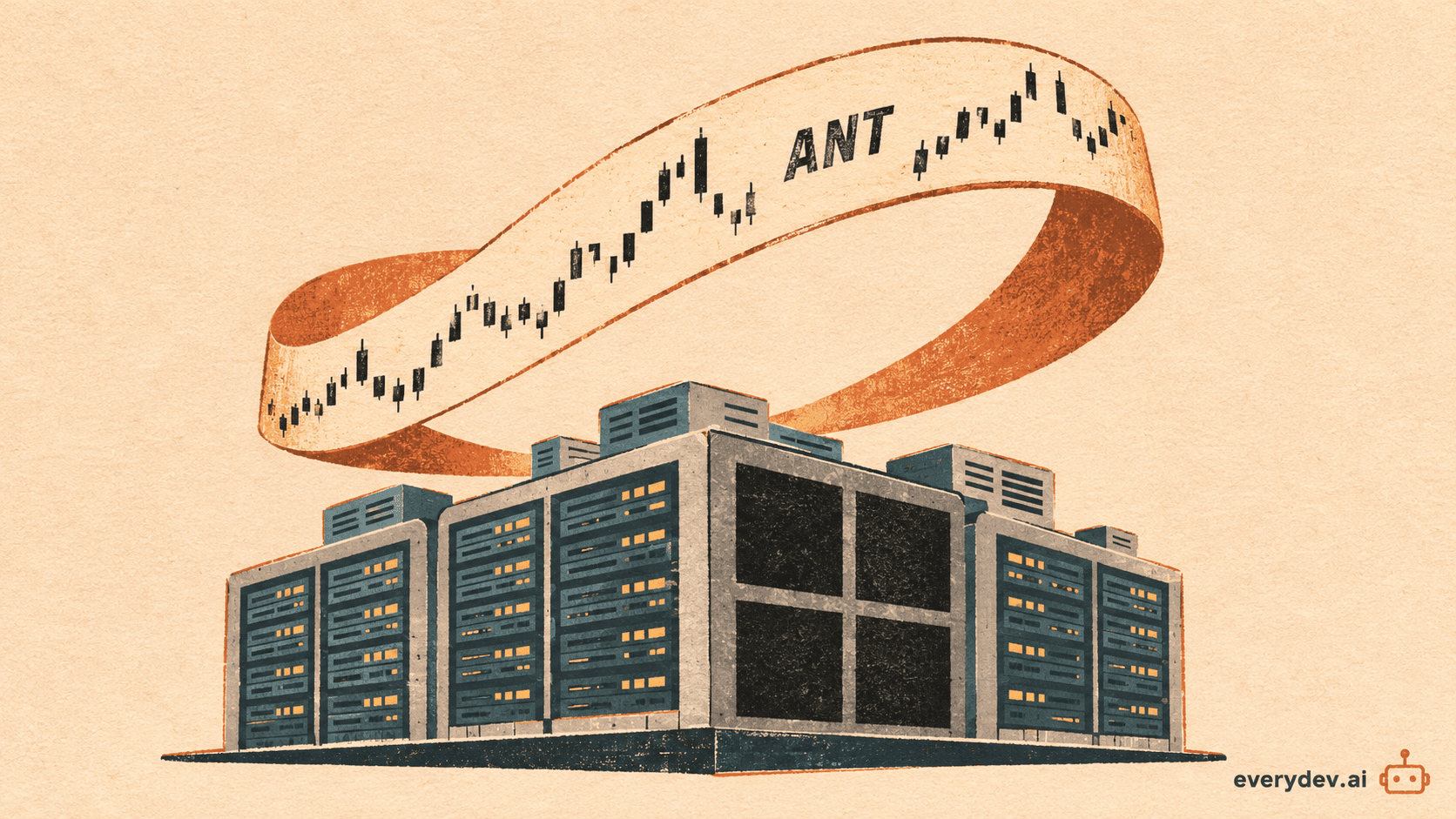
Anthropic expects its shares to begin trading on the Nasdaq Global Select Market on November 19 under the ticker ANT. Anthropic and existing shareholders plan to offer 825 million shares at $70 to $78 each. The prospectus puts expected pricing on November 18. The top of the range implies a fully diluted valuation of about $1.4 trillion, TechCrunch reported. (Roadshow, IPO timetable, Valuation reporting)
Anthropic reported $33.2 billion in revenue for the first nine months of 2026, up from $2.5 billion a year earlier. It reported a $1.3 billion operating loss for the same period. (SEC filing)
The $70.7 billion comes due in the 12 months after September 30. It's part of $900.9 billion in purchase and lease commitments stretching through 2045, nearly all for compute and infrastructure. Much of Anthropic's revenue depends on how much customers use its products. Some of its contracts require it to pay for capacity even if it sits idle. (SEC filing)
The founders' LLC will hold a special share carrying 50.1% of the vote on most shareholder matters. Anthropic estimates that 5% to 7% of its revenue in the first nine months of 2026 came from customers it later found had violated its usage policies or commercial terms. (SEC filing)
Nvidia and Google each agreed to buy $10 billion of nonvoting Anthropic stock in a conditional $26 billion private placement tied to the IPO. Nvidia also named CFO Colette Kress interim CEO after Jensen Huang resigned. Investors told TechCrunch they expect Nvidia to be more selective about future startup funding. For GPU cloud startups that still need to raise money, the question is how much capacity customers will pay for before the hardware bill comes due. (SEC filing, Nvidia announcement, TechCrunch reporting)
In Focus
Microsoft 365's Global Outage Disrupted Outlook, Teams and Copilot
The November 12 outage continued into Friday, disrupting Outlook, Teams, SharePoint, and Microsoft 365 Copilot. It also reached tools outside Microsoft. OpenAI reported trouble connecting ChatGPT to Microsoft 365. Anthropic said mail, calendar, and search requests in its Microsoft 365 connector and Claude for Outlook returned errors for more than 24 hours. Both companies marked their connector incidents resolved on Friday. (Microsoft incident feed via Penn, OpenAI Status, Claude Status)
Australia's prudential regulator warned that financial institutions can lose access to critical services at the same time if they rely on the same providers. ABC News reported that the regulator plans to run its first stress tests for AI risks in 2027. The Microsoft outage shows how that dependency works in practice. A second assistant still needs access to the same inbox. (APRA outlook, ABC News)
In Focus
Rumors, Leaks and Speculation
Google confirmed Gemini 4 Carbon after last week's sightings. Anthropic shipped Fable and Mythos 5.2. The rumored 5.5 versions remain unconfirmed, as do OpenAI's GPT-6.2 Astra and Sol. (Google, Anthropic, OpenAI release notes)
In Focus
Two Gems for TypeScript and Code Review
ttsc builds, checks, and lints TypeScript with a shared compiler. It also lets an agent look up where the compiler resolved a symbol. (Project)
MergeAtlas maps how files in a pull request relate to one another. That gives a reviewer a place to start when a change reaches into unfamiliar code. (Project)
In Focus
Coding Agents Move Onto the Team's Task Board
Cursor opened its multiplayer Projects beta. A shared board shows who owns a task, what their agents are working on, and where the pull request lives. Claude Code's Projects beta has delegated work across cloud sessions since September. Google is previewing its own approach in Antigravity, where a single prompt can assign tasks to several agents. (Cursor Projects, Claude Projects, Google Swarm preview)
Gemini 4 Carbon and Hydrogen both reached the Gemini API. Google positions Carbon for work such as debugging across a large repo. Hydrogen is built for faster coding and tool calls. The separate Gemini Decisions API can score up to 1,000 questions about one input, including which model should handle a request. (Carbon, Hydrogen, Decisions API)
Gemini 4 Carbon also reached GitHub Copilot. Business and Enterprise customers get it under GitHub's default model policy unless an administrator opts out. Cursor lists introductory rates through November 30. On December 1, its listed input and output rates double to $4 and $20 per million tokens. (GitHub Copilot, Cursor pricing)
Meta released Muse Ember for repeat jobs such as tool calls, routing, and small coding tasks. Meta lists API rates of $0.10 per million input tokens and $0.50 per million output tokens through 200,000 tokens of context. Longer inputs use a higher pricing tier. (Meta announcement, API pricing)
Fable 5.2 costs $8 per million input tokens and $40 per million output tokens on the API. Pro and standard Team seats use paid usage credits outside the launch offer. Mythos 5.2 uses the same underlying model with restricted access. In the launch discussion, some developers favored Fable for architecture and difficult reviews. Others said it burned through their allowance. For everyday coding, we'd compare the time and money it takes Fable and Opus to get the same patch ready to merge, cleanup included. (Anthropic launch, Plan rules, Hacker News discussion)
The Pro and standard Team promotion ends November 16 at 11:59 p.m. Pacific. Anthropic will also add Fable 5.2 to Enterprise roles that already allow a Fable model, unless an administrator opts out. (Launch offer, Plan rules)
Claude for Manufacturing connects to systems such as NetSuite and Autodesk Fusion to help prepare quotes, quality reports, and supplier requests. A good trial would ask it to draft a quote from a real job and trace each number back to its source before it goes to a customer. (Claude for Manufacturing)
Replit Agent can prepare purchases and Google Ads campaigns. Checkout starts with one-time purchases for Core and Pro customers in the US. The account owner reviews the total before approving the purchase. (Replit announcement)
In Focus
Developer Tool Updates
- Visual Studio and VS Code. Copilot Chat in Visual Studio now uses the same engine as Copilot CLI and VS Code. In Microsoft's own test with the same model, the new setup solved 124 of 157 C# tasks, up from 103. VS Code 1.146 separately marks the old Local agent for removal in February. (Visual Studio, VS Code)
- Qwen Code and Claude Code. Qwen Code 1.0 Preview combines work from Qoder and Qwen Code. It supports multiple model providers and can resume sessions. Claude Code added an experimental Code Mode that lets Claude write JavaScript to call its tools. It also requires user confirmation before an MCP server can start a sign-in flow. (Qwen release, Claude Code changelog)
- Expo Simulators. Cloud coding agents can launch remote iOS and Android devices, test screens, and capture screenshots or recordings. Expo lists a rate of $0.10 per simulator minute on paid plans. (Expo docs, Launch and pricing)
- Red Hat Developer Hub. Red Hat announced version 2.1, which lets platform teams catalog models, agents, MCP servers, and skills alongside their internal developer tools. General availability is expected later in November. (Red Hat announcement)
- Vercel v0. Eligible OpenAI usage in v0 can count against a connected ChatGPT Business plan. A separate security review runs from the chat and uses v0 credits on paid plans. (v0 changelog)
Two earlier releases help put the new agent features in context. Google's Elephant & Goldfish plugin brings in fresh reviewers to examine an agent's plan before implementation. In October's Co-Design Bench, the best of ten model endpoints met every requirement on 26.4% of real-user app revision tasks under a shared setup. The tools are getting better at handing off work. The review still has to establish what got done. (Google plugin releases, Co-Design Bench)
In Focus
Agent Security and Software Verification
Security firm Claroc said 35,578 of the 37,571 live Grok Build apps it checked opened without a sign-in. Some contained internal information. When researchers published from their own test account, access for anyone with the link was preselected. Claroc said SpaceXSI took down 24 open apps built by its staff and X staff after the researchers reported them. (Claroc report)
Apiiro found credentials in 1,122 of the 104,185 public copies of a Claude Code local settings file it examined. A saved approval could capture the full command, including a password. In a follow-up, Claude Code lead Boris Cherny said the team was looking into ways to prevent it. (Apiiro report and response)
OpenAI runs its internal OpenClaw agents in isolated environments and keeps identity and network controls in separate services. Its Wallet rollout applies a related idea to purchases. After the user approves checkout, Wallet supplies a substitute payment credential. The same approach could let a coding agent query a staging database while a connector keeps the password. (OpenAI engineering notes, Wallet release notes)
Cursor said a key it issued to Fireworks gave an attacker access to historical coding-agent traces from sessions outside Privacy Mode. Some traces contained credentials. The incident also reached Cursor's extension marketplace. Up to 5,000 users may have received a tampered Claude Code extension there on October 29, the company said. (Cursor update)
Microsoft fixed separate MCP and Workspace Trust vulnerabilities in VS Code 1.145.3. GitHub opened a preview that scans new Actions logs for supported credential patterns. Eligible Enterprise Cloud organizations can opt in. (MCP advisory, Workspace Trust advisory, GitHub changelog)
On November 10, Claude Desktop began opening the unified Claude experience by default in affected deployments that connect through a third-party provider. The change could override the old setting that hid Cowork. Anthropic documents a separate control for turning off the unified view. (Claude Desktop deployment docs)
An Anthropic customer notice reproduced by Enjoy said a security research firm may have accessed business contact information and some Enterprise plan, usage, and spending data. Anthropic said the exposure excluded Claude conversations, passwords, and payment information. The Herald Business reported that South Korea's privacy watchdog opened an investigation. (Customer notice, Herald Business)
Privacy Affairs reported that Codex could use an existing forwarded SSH agent on a self-managed remote host if the user's SSH configuration already enabled forwarding. The keys stay on the user's machine. The remote session can use them to authenticate while forwarding is active. (Privacy Affairs test)
Bay launched with $50 million to build controls that check agent actions as they happen. Semgrep launched an application security platform whose Guardian tool scans agent-written code before commit. (Bay announcement, Semgrep announcement)
Google DeepMind used AlphaProof Code to prove specific security properties of Signal's cryptographic implementation. Human experts reviewed the specifications and Lean checked the proofs. (DeepMind research)
OpenAI's researchers reported that written reasoning was a less useful oversight signal for GPT-6 Astra in some of their evaluations. For teams reviewing an agent's work, its explanation is one input. The resulting code, tool activity, and test results give reviewers independent evidence. (OpenAI alignment research)
In Focus
Infrastructure Releases
- Inkling 2 Small. Thinking Machines released downloadable weights under Apache 2.0. SGLang published serving instructions and Vercel added the model to AI Gateway. Vercel separately reported that models less than 60 days old on its gateway handled more than half of October's language-model requests. (Model weights, SGLang, AI Gateway, Production Index)
- Open coding models. Ricursive's Ripple-65B Preview, released November 4, is another downloadable option under Apache 2.0. Ricursive said it spent about $32 million on the project, including development and training. (Ricursive announcement, Model weights)
- Local AWS tests and file transfers. AWS Emulator runs supported AWS services on a developer's machine. Separately, MCP maintainers outlined a proposal for uploading and downloading files between clients and tools. (AWS Emulator, MCP proposal)
- Browser compatibility. Modern Web Guidance reached 1.0. Firefox and Edge joined the project, which gives coding agents guidance on browser support for web features. (Chrome for Developers)
- Inference benchmarks. The vLLM team reported up to 58 times the throughput per GPU for DeepSeek-V4.1-Flash when it compared its Vera Rubin and GB300 rack configurations at a specified output speed. The result applies to the hardware and settings used in the test. (vLLM benchmark)
In Focus
Funding and Policy
Mirendil raised a $1 billion Series A and opened a private beta for Lor, which runs coding and research agents over several days. (Mirendil announcement)
Mercor raised $750 million at a $20 billion valuation to expand model evaluations and post-training. British chip designer Fractile raised more than £500 million in a Series C backed in part by the UK government. (Mercor announcement, UK government)
Stripe and OpenRouter announced on November 10 that the model routing service is now part of Stripe. OpenRouter says it will continue to treat models and providers equally. That's a concrete promise to watch as Stripe brings payments and model routing under one roof. (Stripe announcement, OpenRouter announcement)
The Financial Times reported that Anthropic agreed to a $3.4 billion deal for 1.7 gigawatts of natural gas generators from OnePWR. OnePWR's financial adviser confirmed the transaction value and did not name the buyer. (Financial Times reporting, Piper Sandler transaction notice)
Four nonprofits sued five AI companies in California. They asked a court to halt development and deployment of models more capable than the companies' current systems. (Plaintiffs' announcement)
New York opened registration for large AI developers under the RAISE Act. The law takes effect January 1, 2027. It requires covered companies to disclose their safety measures and report security and safety incidents. Separately, The Information reported that the Trump administration was preparing a rule that would curb Chinese companies' remote access to advanced AI chips. (New York registration announcement, Attorney General's notice, The Information reporting)
Bloomberg Law reported that OpenAI backed proposed chip export restrictions. Reuters reported that Microsoft pushed back on a separate proposal covering Chinese-made optical transceivers, the parts that connect servers over fiber. The two proposals reach different parts of the data center supply chain. (Bloomberg Law, Reuters reporting)
In Focus
Events and Dates to Watch
- November 16. GitHub will temporarily block
pull_request_targetin public repositories without a policy that allows it, from 16:00 to 18:00 UTC. The default block takes effect December 2. (GitHub notice) - November 17-20. Microsoft Ignite runs in San Francisco and online. The Entra program includes sessions on what AI agents can access. (Program)
- November 19. AI Poland runs in Warsaw and online. The program includes speakers from Google, AWS, Sentry, and MongoDB. (Schedule)
- December 8. GitHub will pause Dependabot alerts for most repositories that have gone a year without activity. A push restores the alerts. Organizations can keep them on through enforced security configurations. (GitHub changelog)
The AI Engineer Code Summit has published recordings, transcripts, and reading editions from its San Francisco event. The title of PostHog engineer Alex Lebedev's talk put the first month of its agent rollout at 6,000 pull requests across more than 600 companies. We'd like to know how many of those PRs customers merged and how much review they took. (Code Summit, Talks, Summit schedule)
The SGLang Summit also took place in San Francisco on November 12 and 13. The SGLang team published its guide to serving Inkling 2 Small during the summit. (SGLang Summit, Serving guide)
Conductor removed its cloud shutdown language from the Meta acquisition announcement and says development will continue. Its original release note still lists November 20 as the shutdown date. (Updated announcement, Original release note)