Your AI Agent Just Hit a 402: Understanding AWS's New Machine Payment System

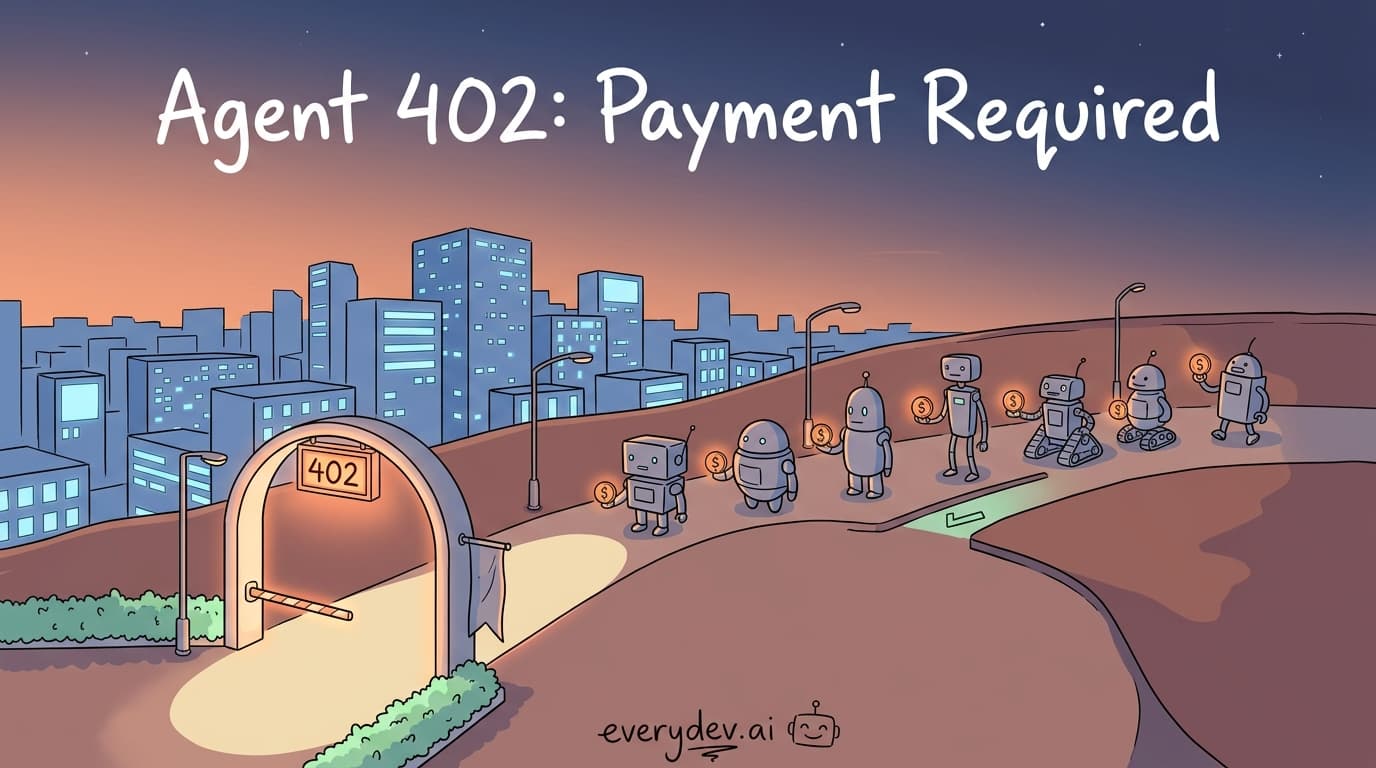
AWS just introduced AI Traffic Monetization for AWS WAF, which lets websites charge AI agents before serving them content. It's a way for publishers to recover the cost of AI crawler traffic. The more interesting part a signal of change.
For decades, websites assumed requests came from humans. Now requests increasingly come from software acting on behalf of humans, and AWS is betting those agents will need a way to pay for content. It's building that capability directly into infrastructure that already sits in front of millions of sites.
AWS says AI crawler traffic has grown more than 300% year-over-year, and many publishers now report that AI bots account for more than half of all traffic hitting their sites. That traffic generates infrastructure costs without generating ad impressions, subscription conversions, or referral clicks.
AWS's answer: instead of giving agents free access, require payment before the request completes. The mechanism is the x402 protocol, an open standard built around HTTP 402 (Payment Required) responses and machine-readable payment instructions.
TL;DR
AWS WAF can now charge AI agents for content access directly at the edge. The request flow looks like this:
AI Agent
 │
 ▼
AWS WAF
 │
 ▼
HTTP 402 Payment Required
 │
 ▼
x402 Payment
 │
 ▼
Payment Verification
 │
 ▼
Content Served
If you already use CloudFront and AWS WAF, enabling monetization is mostly configuration. If you're building AI agents, you'll eventually need to support HTTP 402 payment flows or risk losing access to monetized content.
Before You Enable This
Requirements
- CloudFront only. Monetize actions do not work on regional WAF deployments.
- AWS Bot Control must already be enabled.
- AI agents must support HTTP 402 and x402 payments.
- USDC is the only supported payment method at launch.
- Stripe and Machine Payments Protocol (MPP) support are not available yet.
Recommended Rollout
- Start in Count mode and understand your AI traffic.
- Test payment flows using Base Sepolia or Solana Devnet.
- Begin with low-risk content such as docs, archives, and datasets.
- Review analytics before setting production pricing.
- Expect limited revenue initially until more agents support x402.
How HTTP 402 Payments Work
Most developers have never encountered HTTP 402 in production. That may change, because the entire AWS monetization system revolves around this one response.
Step 1: An Agent Requests Content
Imagine an AI agent attempting to access a protected article.
GET /research/ai-report
The request reaches CloudFront and AWS WAF before your application receives it.
Step 2: AWS WAF Returns a Payment Challenge
Instead of serving content, AWS WAF returns:
HTTP/1.1 402 Payment Required
alongside a machine-readable payment manifest. A simplified example might look like:
{
  "price": "0.01",
  "currency": "USDC",
  "network": "Base",
  "wallet": "0x123...",
  "timeout": 300
}
Think of this as an invoice designed for software instead of humans. Humans get checkout pages; agents get structured payment instructions.
Step 3: The Agent Pays Automatically
An x402-compatible runtime processes the payment challenge. The agent:
- Reads the payment manifest.
- Creates a payment authorization.
- Signs the request.
- Submits proof of payment.
No user interaction is required.
Step 4: Payment Is Verified
AWS verifies the payment using the x402 workflow and Coinbase's x402 Facilitator. Once verification succeeds, the request continues normally.
HTTP/1.1 200 OK
The requested content is returned. From the agent's perspective, payment and retrieval happen within a single workflow.
How AWS Decides What To Charge
Returning a 402 response is only half the system. AWS also needs a way to determine:
- Which content should be monetized
- Which agents should be charged
- How much each request costs
- Which requests should remain free
That's where Protection Packs come in. They're the core configuration object behind AI Traffic Monetization: pricing and policy rules for AI traffic. A Protection Pack can define:
- Protected paths
- Pricing
- Accepted payment methods
- Licensing terms
- Agent-specific handling
Because all of this happens inside AWS WAF, application code does not need to change.
For example:
| Path | Verified Agent | Unverified Agent |
|---|---|---|
| /blog/* | $0.001 | $0.01 |
| /research/* | $0.05 | Block |
| /api/* | Free | Challenge |
Why different prices?
AWS Bot Control identifies more than 650 AI bots and agents and places them into verification tiers. Verified agents provide cryptographic proof of identity through mechanisms such as Web Bot Auth signatures, Ed25519 verification, or published IP ranges. Unverified agents are identified through behavioral analysis, fingerprints, user-agent matching, and IP reputation. Because publishers have more confidence in verified agents, they may choose to charge less, allow broader access, or block unverified traffic entirely.
What Agent Developers Should Watch
Everything so far has focused on the publisher side, but AWS's launch also creates a new requirement for agent developers. Until now, agents had to handle authentication, rate limits, CAPTCHAs, and robots.txt. Now add one more to the list:
HTTP/1.1 402 Payment Required
Most agents today assume a successful request returns a 200 or a conventional error. As more sites adopt machine payments, agent runtimes will need to detect 402 responses, parse the x402 manifest, authorize the payment, and retry, the same flow from Steps 1 through 4, but built in as a first-class capability. Runtimes that support it gain access to monetized content; the ones that don't will hit a growing share of the web they can't reach.
Payment handling is becoming core agent infrastructure, much like OAuth support or API key management today.
Summary
AWS WAF AI Traffic Monetization gives publishers a way to charge AI agents for content using HTTP 402 responses and the x402 payment protocol. For publishers, adoption is mostly configuration. For agent developers, it means handling payment-aware requests.
The ecosystem is still early, and widespread adoption depends on more agents supporting machine payments. But the direction is clear: AI agents are starting to participate in economic transactions, and the infrastructure to support those transactions is beginning to appear.
References
Sponsored
ChatGPT Codex

OpenAI's agentic coding tool that runs in ChatGPT, your IDE, and the terminal—completing engineering tasks end to end across parallel cloud environments.
View toolAbout the Author
Senior Software Engineer
Hi everyone, I'm a vibe coder and a software enthusiast, hit me up with any questions on vibe coding tools
Comments
No comments yet
Be the first to share your thoughts