
Chandra
Open-source OCR model from Datalab that converts images and PDFs into structured HTML, Markdown, or JSON while preserving layout.
At a Glance
Chandra code is Apache 2.0; model weights use a modified OpenRAIL-M license (free for research, personal use, and startups under $2M funding/revenue; cannot be used competitively with the API).
Engagement
Available On
Alternatives
Listed Nov 2026
About Chandra
Chandra is an open OCR model from Datalab that converts images and PDFs into structured HTML, Markdown, or JSON while preserving layout information. The current release, Chandra OCR 2 (v0.2.0, published March 2026), ships with a Python CLI, a Streamlit demo app, and vLLM or HuggingFace inference backends.
What It Is
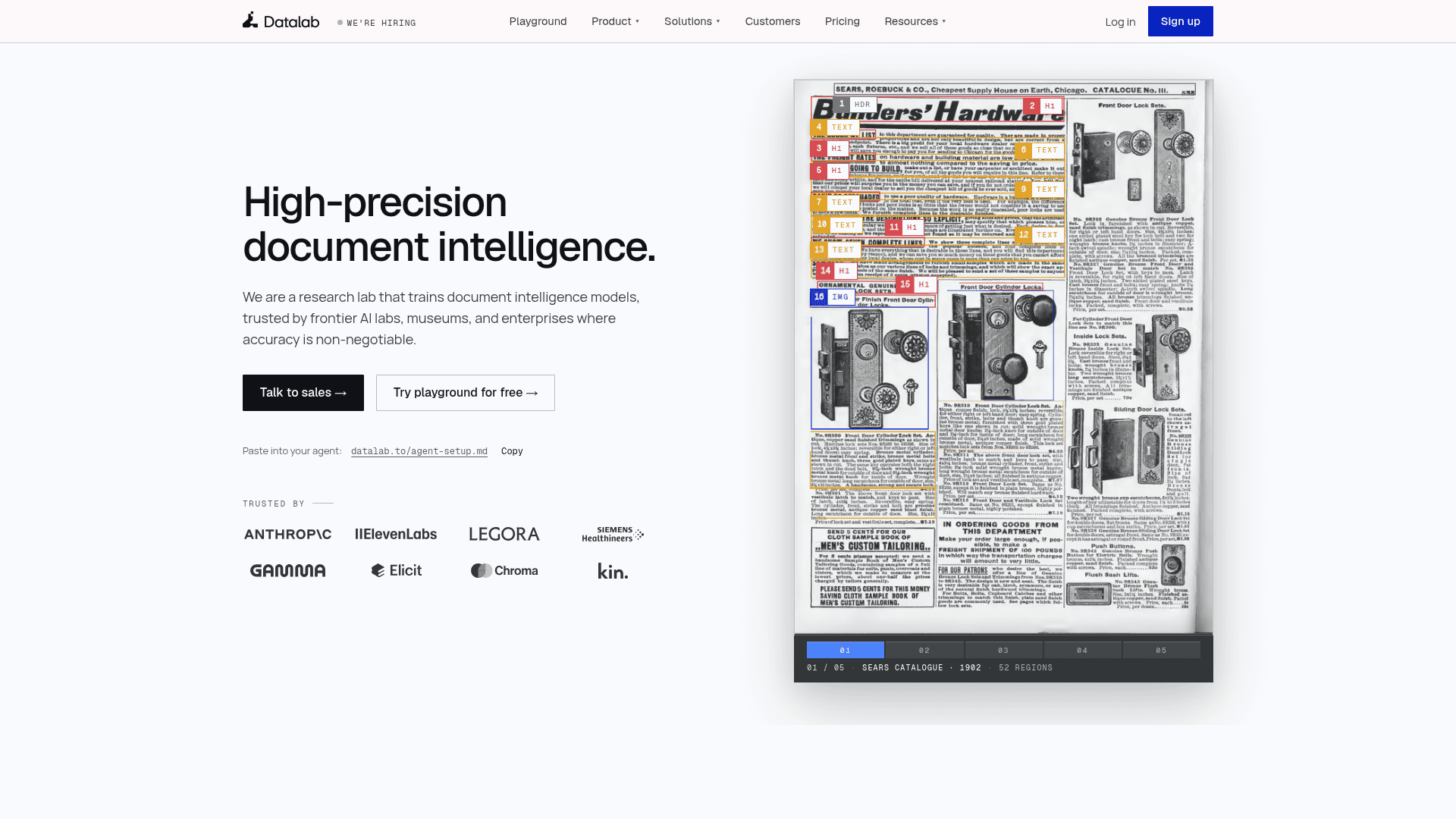
Chandra is a document OCR model plus tooling. You give it images or PDFs and it returns Markdown, HTML, and a metadata JSON file with page information and token counts. Extracted images are saved alongside the text. The README lists support for 90+ languages, handwriting, forms including checkboxes, tables, math, and complex layouts, along with image and diagram extraction with captions and structured data.
How You Run It
Install with pip install chandra-ocr. The base install targets a vLLM backend, and a chandra_vllm command launches a Docker-based vLLM server. A HuggingFace backend (requires torch) is available as an extra. The chandra command processes a single file or a directory, with options for page ranges, max output tokens, parallel workers, batch size, image extraction, and header/footer inclusion. Settings can come from environment variables or a local.env file. The README suggests flash attention for the HuggingFace method.
Benchmarks and Licensing
Datalab reports its own multilingual benchmark and olmOCR benchmark results, with Chandra 2 scoring 85.8 overall in its published table. These are vendor-reported figures. The code is Apache 2.0. The model weights use a modified OpenRAIL-M license, which Datalab describes as free for research, personal use, and startups under $2M funding or revenue, and not usable competitively with its API. Commercial self-hosting needs a license.
Relationship to the Datalab Platform
Datalab also offers a managed platform that it says uses an improved Chandra and other models with higher accuracy than the open weights. The platform has processors for convert, extract, segment, and eval, versioned pipelines, and managed cloud, VPC, or air-gapped deployment.
Community Discussions
Be the first to start a conversation about Chandra
Share your experience with Chandra, ask questions, or help others learn from your insights.
Pricing
Open source code (self-hosted)
Chandra code is Apache 2.0; model weights use a modified OpenRAIL-M license (free for research, personal use, and startups under $2M funding/revenue; cannot be used competitively with the API).
- Code under Apache License 2.0
- Model weights under modified OpenRAIL-M, not wholly OSI open source
- Commercial self-hosting requires a license above the revenue/funding threshold
- Local (HuggingFace) and remote (vLLM) inference
Free (hosted API)
A free monthly allowance against the full hosted API, then pay-as-you-go.
- Monthly included usage $20 (work email) / $10 (personal email)
- Rate limit 25 requests/min
- Concurrency 25
- Community support
- SOC 2 Type II report
Team
For teams running in production, with higher rate limits, better support, and more.
- $400 monthly included usage
- Rate limit 400 requests/min
- Concurrency 400
- Email + Slack support
- BAA / DPA
- Admin MFA enforcement
- 4 custom-processor creations/mo, then $5 each
- Convert accurate $10 per 1,000 pages; Convert fast/balanced $4; Convert lite $0.50
Enterprise
Custom processing solutions on the API or your infrastructure, with custom terms.
- Volume-based discounts
- SSO
- Run in your own VPC
- Fully air-gapped
- Dedicated support
- MSA / SLA
Capabilities
Key Features
- Converts images and PDFs to Markdown, HTML, or JSON with layout information
- Support for 90+ languages
- Handwriting recognition
- Form reconstruction including checkboxes
- Table, math, and complex layout handling
- Image and diagram extraction with captions and structured data
- Local (HuggingFace) and remote (vLLM server) inference modes
- CLI and Streamlit demo app
- Page range selection and batch processing options