CodeBoarding
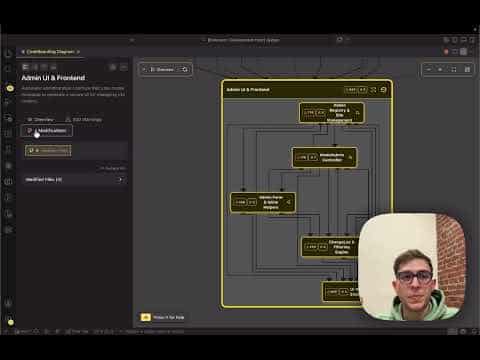
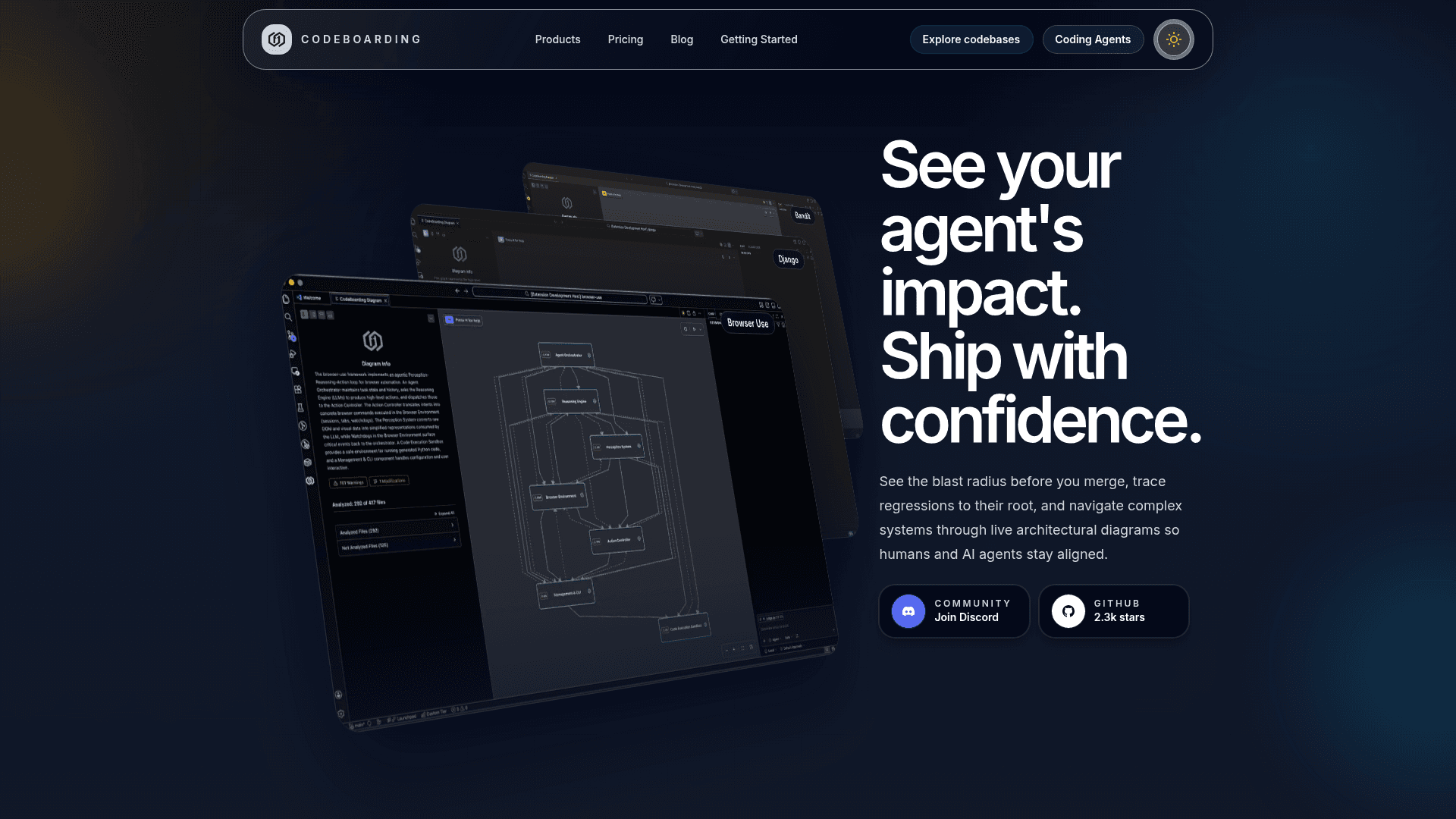
CodeBoarding generates interactive architectural diagrams and documentation for codebases by combining static analysis with LLM reasoning, helping developers and AI agents understand system structure.
At a Glance
About CodeBoarding
CodeBoarding is an open-source tool that gives developers and coding agents a visual map of any codebase. It combines static analysis with LLM reasoning to produce architecture diagrams, component-level documentation, and navigable outputs usable in IDEs, CI pipelines, and docs. The project is MIT-licensed, actively maintained on GitHub, and available as a CLI, VS Code extension, and GitHub Action.
What It Is
CodeBoarding sits in the "understand" and "validate" phases of the AI development workflow. It parses a repository using language server protocol (LSP) clients and static analysis, then passes structured results to an LLM agent that generates high-level system architecture diagrams, deeper component diagrams for important subsystems, and Markdown documentation written to a .codeboarding/ directory. The output is Mermaid-formatted, making it easy to embed in pull requests and docs. The tool is designed to keep humans and AI coding agents aligned with the real architecture as code evolves.
Architecture and How It Works
CodeBoarding's internal pipeline has six main components:
- Application Orchestrator & Repository Manager — initiates the analysis workflow and detects code changes for incremental updates
- Incremental Analysis Engine — requests static analysis only for new or changed code segments, caching results
- Static Code Analyzer — performs deep code parsing and structural analysis using LSP
- LLM Agent Core — receives project context and drives the main analysis workflow
- Agent Tooling Interface — lets the LLM agent invoke specialized tools to query the static analysis engine
- Documentation & Diagram Generator — converts LLM agent insights into Mermaid diagrams and Markdown docs
Supported languages include Python, TypeScript, JavaScript, Java, Go, PHP, Rust, and C#. Supported LLM providers include OpenAI, Anthropic, Google, Vercel AI Gateway, AWS Bedrock, Ollama, OpenRouter, and LiteLLM proxy.
Where It Fits in the Stack
CodeBoarding is available in four deployment surfaces:
- CLI (
codeboardingvia pipx or pip) for local analysis, automation, and CI workflows - VS Code Extension (also available on OpenVSX for Cursor and Windsurf) for in-editor visual architecture
- GitHub Action to keep diagrams updated automatically in CI
- Hosted diagram explorer at codeboarding.org/diagrams for browsing generated examples
The same shared system map is accessible across all surfaces, so every teammate and every agent starts from the same source of truth.
Update: v0.12.2
The latest release is v0.12.2, published June 13, 2026. The GitHub repository was created in April 2025 and has been actively pushed to as recently as June 2026. The homepage footer lists the current stable version as v0.9.2, while the GitHub release page shows v0.12.2 as the latest tag, indicating rapid iteration. The project lists itself as "Actively Maintained" and "Open Source" on the homepage.
Open-Source Adoption Signal
The GitHub repository reports 2,279 stars and 188 forks as of mid-2026. The homepage lists open-source repositories from organizations including Pfizer, Atlassian, RatchLab, SerEngil (DeepFace), Recursion Pharma, 2noise (ChatTTS), and LastMile AI as projects where CodeBoarding-generated documentation has been applied — these are vendor-published claims on the homepage. The project states it has visualized over 800 open-source repositories, with generated examples browsable in the GeneratedOnBoardings GitHub organization.
Community Discussions
Be the first to start a conversation about CodeBoarding
Share your experience with CodeBoarding, ask questions, or help others learn from your insights.
Pricing
Free
For individuals — limited usage and features.
- Limited usage and features
- Multilayered architecture visualization
- Tracking git changes
- Export diagram to PNG
Pro
For power users — unlimited usage with premium features.
- Unlimited usage
- Multilayered architecture visualization
- Tracking git changes
- Export diagram to PNG
- Faster diagram generation
- Health monitoring
- Iterative changes
Enterprise
For organizations — custom pricing with support and integrations.
- Unlimited usage
- Multilayered architecture visualization
- Tracking git changes
- Export diagram to PNG
- Faster diagram generation
- Health monitoring
- Iterative changes
- Support
- Integrations with custom environments
- Custom requests and features
- Early access to features
Capabilities
Key Features
- Interactive architectural diagrams generated from static analysis
- Multilayered architecture visualization
- Component-level Markdown documentation in .codeboarding/
- Mermaid diagram output for embedding in docs and PRs
- Incremental analysis — re-analyzes only changed parts
- Git change tracking
- Export diagram to PNG
- In-editor visual architecture via VS Code/Cursor/Windsurf extension
- GitHub Action for CI diagram updates
- CLI for local and automated workflows
- Supports Python, TypeScript, JavaScript, Java, Go, PHP, Rust, C#
- Supports OpenAI, Anthropic, Google, Vercel, AWS Bedrock, Ollama, OpenRouter, LiteLLM
- Health monitoring (premium)
- Iterative change tracking (premium)
- Anonymous telemetry with opt-out
Integrations
Demo Video