
Lago
Open-source, API-first billing platform for usage-based, subscription, prepaid, and hybrid pricing, with metering, invoicing, and revenue analytics.
At a Glance
Open-source edition of Lago, free to self-host under the AGPLv3 license; infrastructure and operating costs are separate.
Engagement
Available On
Alternatives
Listed Nov 2026
About Lago
Lago is a billing platform from Lago, built around metering product usage and turning it into pricing, credits, entitlements, invoices, and payments. It is available as hosted Lago Cloud or as a self-hosted, AGPLv3-licensed open-source edition. The latest GitHub release listed is v1.57.0.
What It Is
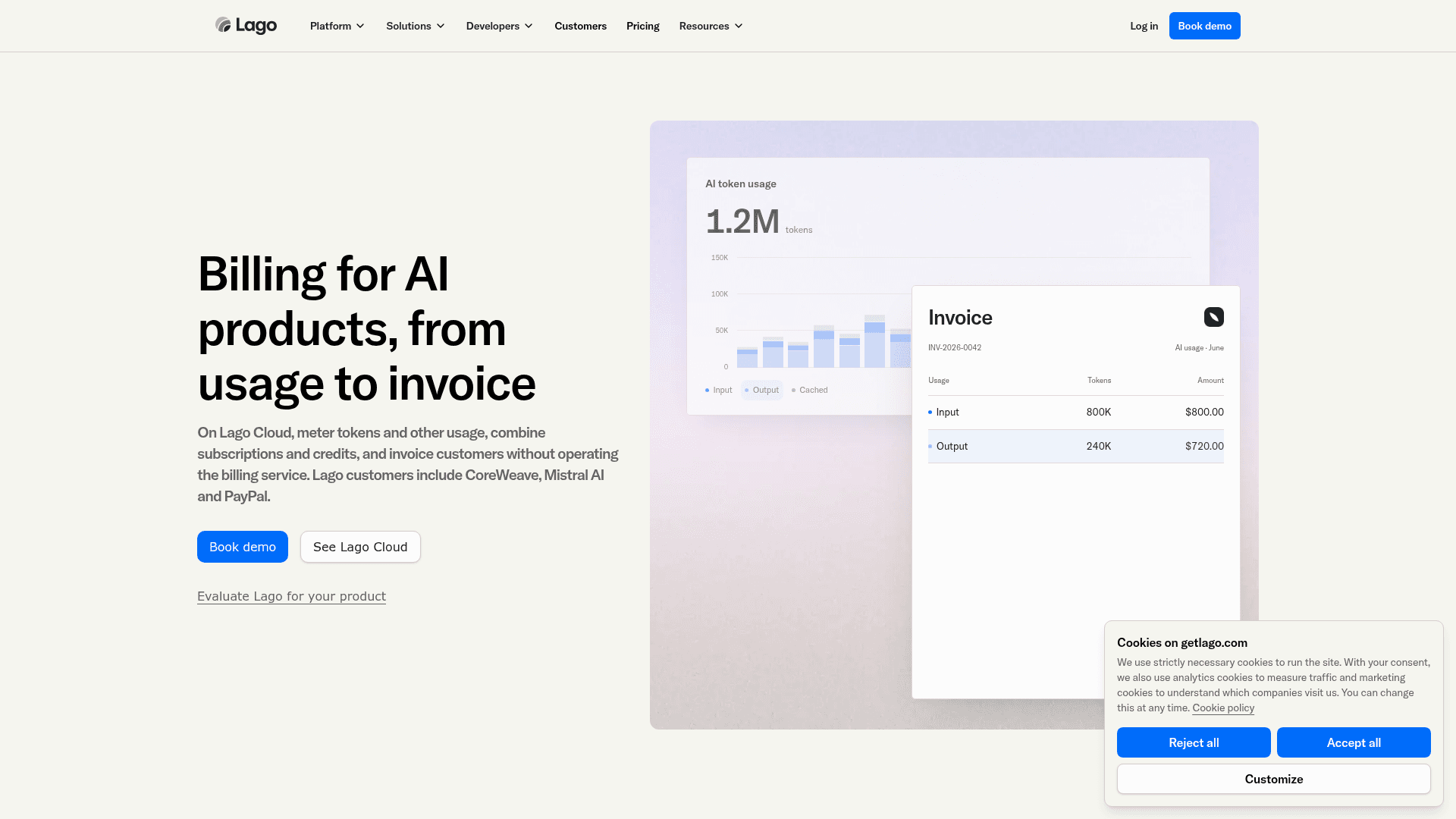
Lago sits between product usage and revenue. Applications send usage events, which become billable metrics. Pricing and entitlements are applied to them, and Lago then generates invoices and coordinates payment collection. Usage can include tokens by model, GPU or compute consumption, API calls, seats, or custom events.
Lago does not replace a payment processor. It calculates charges, generates invoices, and applies tax, while a connected provider handles payment.
Billing and Pricing Workflow
The documented platform covers real-time event ingestion with idempotency by transaction ID, and batch ingestion. Pricing models include usage-based, recurring, prepaid, percentage, graduated, package, volume, minimum-commitment, and hybrid charges. Prepaid credits support wallets and top-ups, and usage alerts are also described. Invoices, credit notes, taxes, multiple currencies, and customer-specific overrides are supported. Revenue analytics, revenue recognition, dunning, and quotes and order forms are part of the platform.
Developer and Agent Interfaces
Lago is headless and API-first. It offers a REST API with an OpenAPI 3.1 specification, signed webhooks, and SDKs for languages including JavaScript, Python, Ruby, and Go. A Lago CLI lets users run billing commands from the terminal. An MCP server gives MCP-compatible assistants tools for billing data and operations, and it inherits the permissions of its API key. Agent SDKs for Python and JavaScript wrap supported LLM clients to send token usage events. Lago also describes Finance and Billing assistants and a Dunning Agent.
Deployment Model
Lago Cloud is run by Lago. Teams can instead self-host with Docker Compose or Helm charts, on-premise or in their own cloud. The README includes a local demo that prices illustrative AI requests with Docker, curl, and jq. Lago states it is SOC 2 Type II certified. Lago Embedded offers white-label billing for platforms.
Community Discussions
Be the first to start a conversation about Lago
Share your experience with Lago, ask questions, or help others learn from your insights.
Pricing
Open Source (Self-hosted)
Open-source edition of Lago, free to self-host under the AGPLv3 license; infrastructure and operating costs are separate.
- AGPLv3-licensed core
- Self-hosted on your own infrastructure
- Infrastructure and operating work not included
Lago Premium
Premium edition available on Lago Cloud or self-hosted, with pricing quoted on request.
- Available with Cloud Deployment and Self Hosted Deployment
- Billable metrics and usage ingestion
- Entitlements
- Invoicing and credit notes
- SSO via Okta
- RBAC + custom role
- Business hours incident management
- Add-ons on demand: premium ingestion sources, progressive billing, tax integrations, automatic dunning, 24x7 incident management
Capabilities
Key Features
- Real-time usage metering with idempotent event ingestion
- Usage-based, subscription, prepaid, and hybrid pricing models
- Prepaid credits, wallets, top-ups, and usage alerts
- Invoicing, credit notes, taxes, and multi-currency support
- Entitlements and quotas
- Quotes and order forms
- Cash collection with dunning and payment retries
- Revenue analytics and revenue recognition
- REST API, OpenAPI spec, webhooks, and SDKs
- Lago CLI
- MCP server for AI assistants
- Agent SDKs for LLM usage metering
- Finance and Billing AI assistants
- Lago Embedded white-label billing
- Self-hosting and Lago Cloud deployment
- Role-based access control