
Looper
Open-source platform for hiring AI loopers, autonomous operators that each own and work one business metric.
At a Glance
Run Looper on your own servers under the MIT license; you pay Vercel and your AI provider directly.
Engagement
Available On
Listed Nov 2026
About Looper
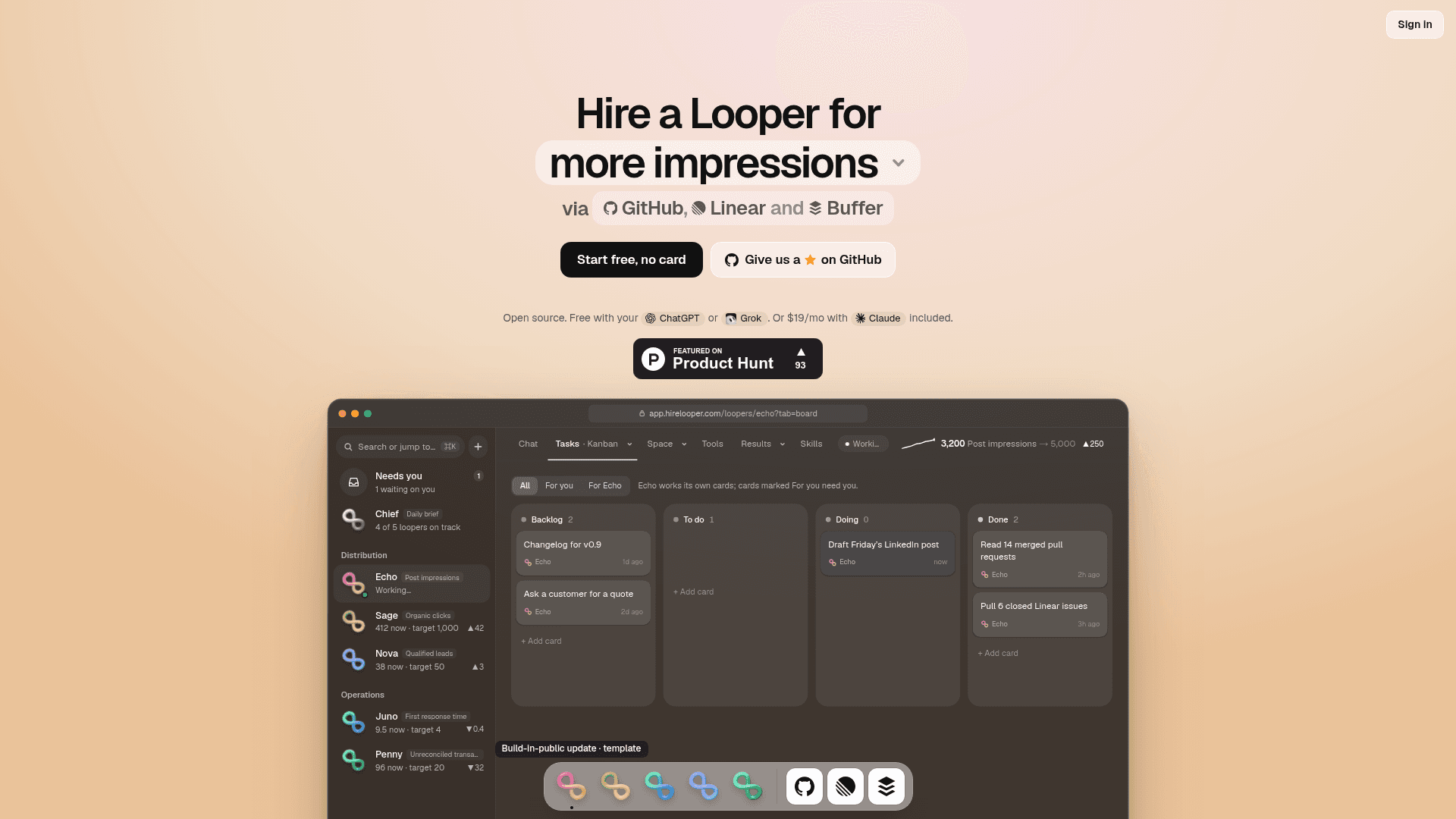
Looper is an open-source product from hirelooper, hosted at hirelooper.com, that lets users hire AI "loopers" which each own one business metric and work on it every day. Each looper tracks its metric against a target, runs scheduled skills against connected apps, and reports progress on a Kanban board. It can be used hosted or self-deployed on Vercel, and the repository is MIT licensed.
What It Is
Looper is an AI agent workspace organized around business metrics rather than tasks. A looper is defined by one metric with a target and direction, logged over time. Examples shown include post impressions, organic clicks, qualified leads, first response time and unreconciled transactions.
A coordinating agent called Chief hires loopers for your goals and writes a daily brief. Ready-to-hire templates include SEO & GEO, Customer Support and Build-in-Public Update. You can also describe a goal and Chief drafts a looper for it.
How a Looper Works
Each looper plans its week, runs skills on a schedule (hourly, daily, weekly or on demand), and works cards on its own Kanban board. Skills use connected apps such as Gmail, Search Console, Buffer, GitHub and Linear, with more than 1,000 additional apps available through Composio. Each looper also has a private Linux computer with Chrome that can be watched live and replayed step by step.
A space gives each looper a database and a canvas for references, images and boards. A weekly retro scores the looper's effectiveness and decides what to try next, and skills are updated afterward.
Approvals and Control
Loopers research, draft and plan on their own, but sending, publishing, paying and deleting wait for user approval in a Needs you queue. Teams can share workspaces through invite links, working with the same loopers, chats, boards and approvals.
Setup and Self-Hosting
Hosted use runs in the browser, with AI powered by a connected ChatGPT or Grok subscription, an API key, or included Claude credits on paid plans. For self-hosting, the README describes a one-click Vercel deploy with a Neon database, or running locally with npm. Without configuration, local data is stored as JSON files, and Postgres, email sign-in, Composio connections and search providers are configured through environment variables.
Community Discussions
Be the first to start a conversation about Looper
Share your experience with Looper, ask questions, or help others learn from your insights.
Pricing
Self-hosted (open source)
Run Looper on your own servers under the MIT license; you pay Vercel and your AI provider directly.
- MIT license
- No Looper account, no seat limits
- Billing and included Claude credits are hosted-service only
Individual
For you, with Claude included
- Everything in Free
- 19 Claude credits every month
- Your own plan or key works alongside
Team
For teams who work with loopers together
- Everything in Individual
- 99 Claude credits every month
- Unlimited collaborators, invite links
Capabilities
Key Features
- One business metric per looper with target and direction
- Scheduled skills (hourly, daily, weekly or on demand)
- Kanban board and calendar of runs
- Private Linux computer with Chrome, viewable live and replayable
- Database and canvas space per looper
- Weekly retro with self-scored effectiveness
- Chief agent that hires loopers and writes a daily brief
- Approval queue for sending, publishing, paying and deleting
- Ready-to-hire templates
- Team workspaces with invite links
- Self-hosting on Vercel with Neon
- Bring your own ChatGPT, Grok or API key