
Macro
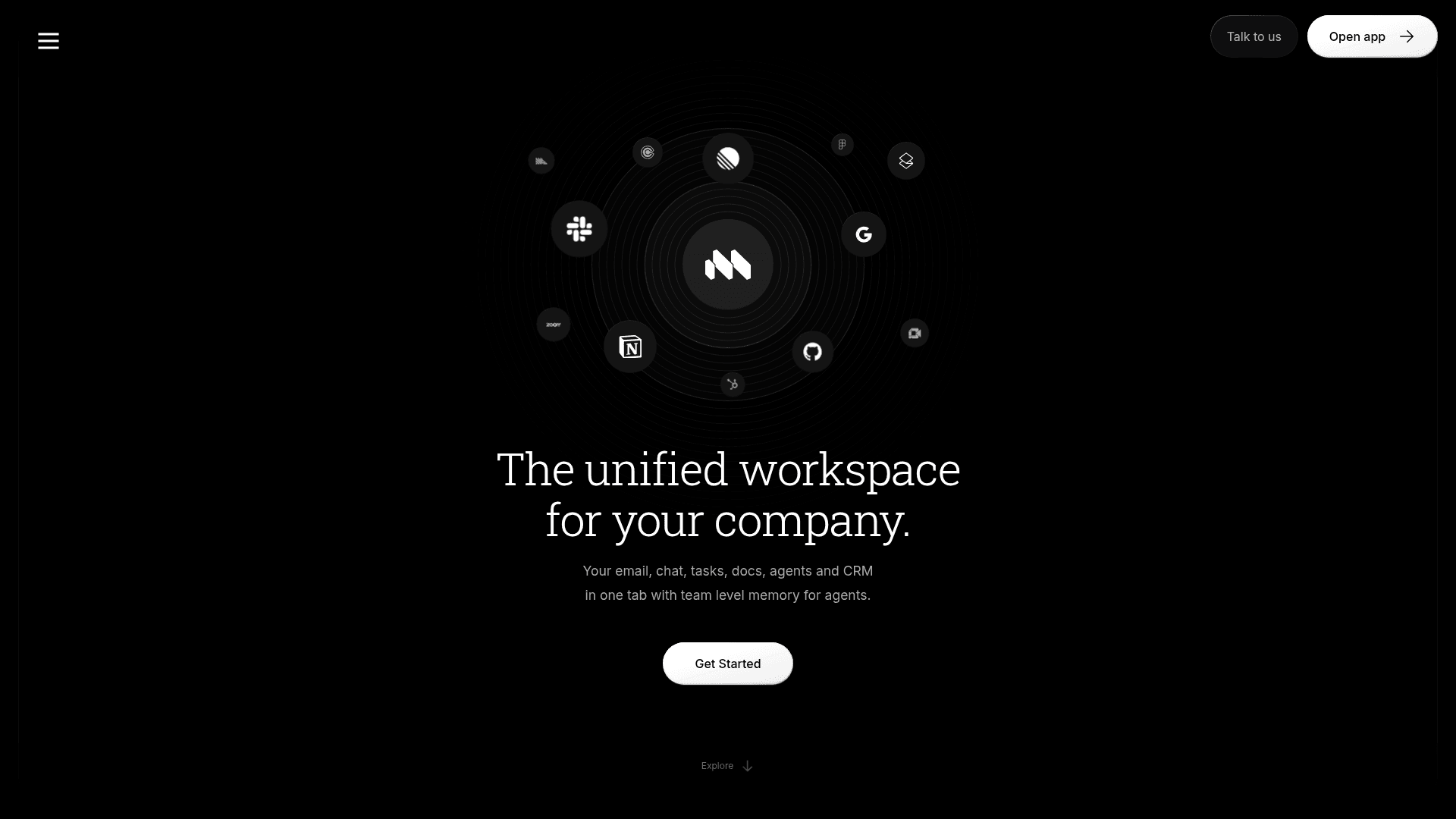
Open-source unified workspace combining email, chat, docs, tasks, calls, CRM and AI agents with shared team-level memory.
At a Glance
Free per seat; no credit card required.
Engagement
Available On
Updated Oct 2026
About Macro
Macro is a unified workspace from macro-inc that brings email, chat, documents, tasks, calls, CRM and agents into one interface with shared team-level memory. It is available as a hosted web app with an iOS app, and its source code is published under the AGPL-3.0 license. The README states it is built with SolidJS and Rust.
What It Is
Macro is an all-in-one work platform that replaces separate email, messaging, task, document and CRM tools. Its surfaces are described as modular blocks that share one backend, so references between a doc and a task, or a channel message and an email, are stored as a bidirectional graph. Everything is @-linked and searchable, and the hosted app connects to Gmail or Google Workspace accounts.
Core Workspace Blocks
- Email: multi-account unified inbox with keyboard shortcuts, shared inboxes, and emails, messages, @mentions and tasks in one list.
- Chat: channels and DMs where the first replies show inline and the rest collapse into threads.
- Tasks: created from emails, channel messages, markdown bullets, agent chats, or via MCP, API or SDK, and linked back to their source.
- Docs: markdown-native documents built on CRDTs with live collaboration, version history, offline editing and agent editing.
- CRM: company and contact objects, kanban deal stages, saved views and email sync, with each deal getting its own channel.
- Also: canvas, calls (recorded and transcribed), file storage and GitHub pull request linking.
Agents and Team Memory
A daily job synthesizes team conversations, emails, tasks and calls into a markdown memory that agents can use. The memory is available to external agents via MCP or through a model picker covering providers such as OpenAI, Google and Anthropic. The README says the MCP/tool surface covers nearly everything in the UI. Coding agents such as Claude Code can connect with an MCP command, and agents can edit documents as peers in the CRDT system.
Open Source and Security
Macro is published under AGPL-3.0, and the README says it is not open core. Self-hosting is supported under AGPL terms, with separate contacts for alternative licensing and managed hosting. The site and README cite ISO 27001, SOC 2 and CASA Tier 2, and the README says there is zero data retention with model providers and no training on customer data.
Community Discussions
Be the first to start a conversation about Macro
Share your experience with Macro, ask questions, or help others learn from your insights.
Pricing
Free
Free per seat; no credit card required.
- Limited AI usage
- Gemini Flash
- Agents with workspace context
- Up to 2 connected email accounts
- 5 GB storage
Pro
USD 40 per seat per month, with 30 days free.
- Standard AI usage
- All available AI models
- Agents with workspace context
- Unlimited connected email accounts
- 100 GB storage
- Calls, recording and transcription
- Team-level agent memory
- "Sent with Macro" email footer removed
Max
USD 200 per seat per month, with 10x Pro AI usage.
- 10x Pro AI usage
- All available AI models
- Agents with workspace context
- Unlimited connected email accounts
- 1 TB storage
- Calls, recording and transcription
- Team-level agent memory
- "Sent with Macro" email footer removed
- Priority support
Capabilities
Key Features
- Multi-account unified inbox with keyboard shortcuts
- Team chat with channels, DMs and threads
- Tasks linked to emails, messages and pull requests
- Real-time collaborative markdown docs built on CRDTs
- Built-in CRM with company and contact objects and deal stages
- Bidirectional @linking across workspace items
- Team-level agent memory refreshed daily
- MCP server and tool surface for external agents
- Recorded and transcribed calls
- Sheets, databases, canvas and file storage
- GitHub pull request integration
- Channel-based permissions
- Self-hostable under AGPL-3.0