Task Hounds
A local-first, inspectable multi-agent development workspace where a Manager plans, a Worker implements, and a Reviewer checks work, powered by OpenCode.
At a Glance
Self-hosted, local-first multi-agent development workspace released under the MIT License. Model provider API keys are external costs.
Engagement
Available On
Alternatives
Listed Nov 2026
About Task Hounds
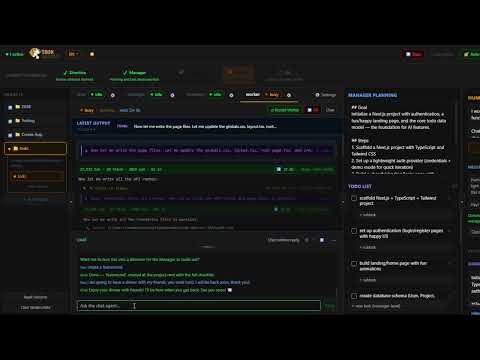
Task Hounds is an open-source, MIT-licensed multi-agent development workspace built on OpenCode. It turns a single human goal, called a Human Directive, into a visible loop in which a Manager plans, a Worker implements, and a Reviewer verifies the result. Directives, todos, reports, and agent state are stored locally and shown in a live dashboard. The latest listed release is v1.1.0.
What It Is
Task Hounds is a local multi-agent coding orchestrator aimed at developers who want agent autonomy without giving up control or context. The Manager maintains the plan and releases one concrete task at a time. The Worker implements it and files a structured report covering files changed, tests, and known issues. The Reviewer inspects the result for bugs, UX problems, edge cases, and safety risks and routes feedback back to the Manager. A Chat role lets the user discuss the project with the system directly.
How the Loop Works
Human input is split into three kinds: a durable HUMAN_DIRECTIVE that only a human can change, free-form thoughts and suggestions that the Manager digests, and explicit suggested tasks that the Manager adds to the plan. Machine-readable todo JSON is validated and repaired before work is released. Autonomous work does not begin without a pending Human Directive. Users can start a continuous loop or run a single iteration.
Model Providers and Configuration
Models are reached through OpenCode's Anthropic-compatible providers. MiniMax (the default), Moonshot Kimi, and Alibaba Bailian are bundled, with provider keys set through environment variables or the dashboard's Runtime panel. Each role resolves its model independently, so the Manager, Worker, and Reviewer can run on different models. Role bindings set in the dashboard override environment variables.
Ways to Run
The project can be run as a web dashboard served by a FastAPI backend, through Docker or Docker Compose, as a portable Windows Electron desktop build, or via pip from Git, which exposes the backend and CLI. An experimental React and Capacitor Android client connects to the same backend, with private access via Tailscale recommended. SQLite is the runtime source of truth for sessions, directives, todos, reports, and agent state.
Community Discussions
Be the first to start a conversation about Task Hounds
Share your experience with Task Hounds, ask questions, or help others learn from your insights.
Pricing
Open Source (MIT)
Self-hosted, local-first multi-agent development workspace released under the MIT License. Model provider API keys are external costs.
- MIT licensed
- Local-first: workspace, database, runtime state and logs stay on your machine
- Run via web dashboard, Docker, Windows desktop app, or experimental Android client
- Bring your own model provider key (MiniMax, Moonshot Kimi, Alibaba Bailian) - external cost
Capabilities
Key Features
- Manager, Worker, and Reviewer agent loop
- Durable Human Directive that agents cannot edit
- Live dashboard of todos, reports, and agent state
- Local SQLite-backed project state and reusable role sessions
- Per-role model selection
- Validated and repaired todo JSON
- Start Loop and Run Once modes
- Web dashboard, Docker, Windows desktop app, and experimental Android client
- Chat interface to the agent system
Integrations
Demo Video