
unkernel
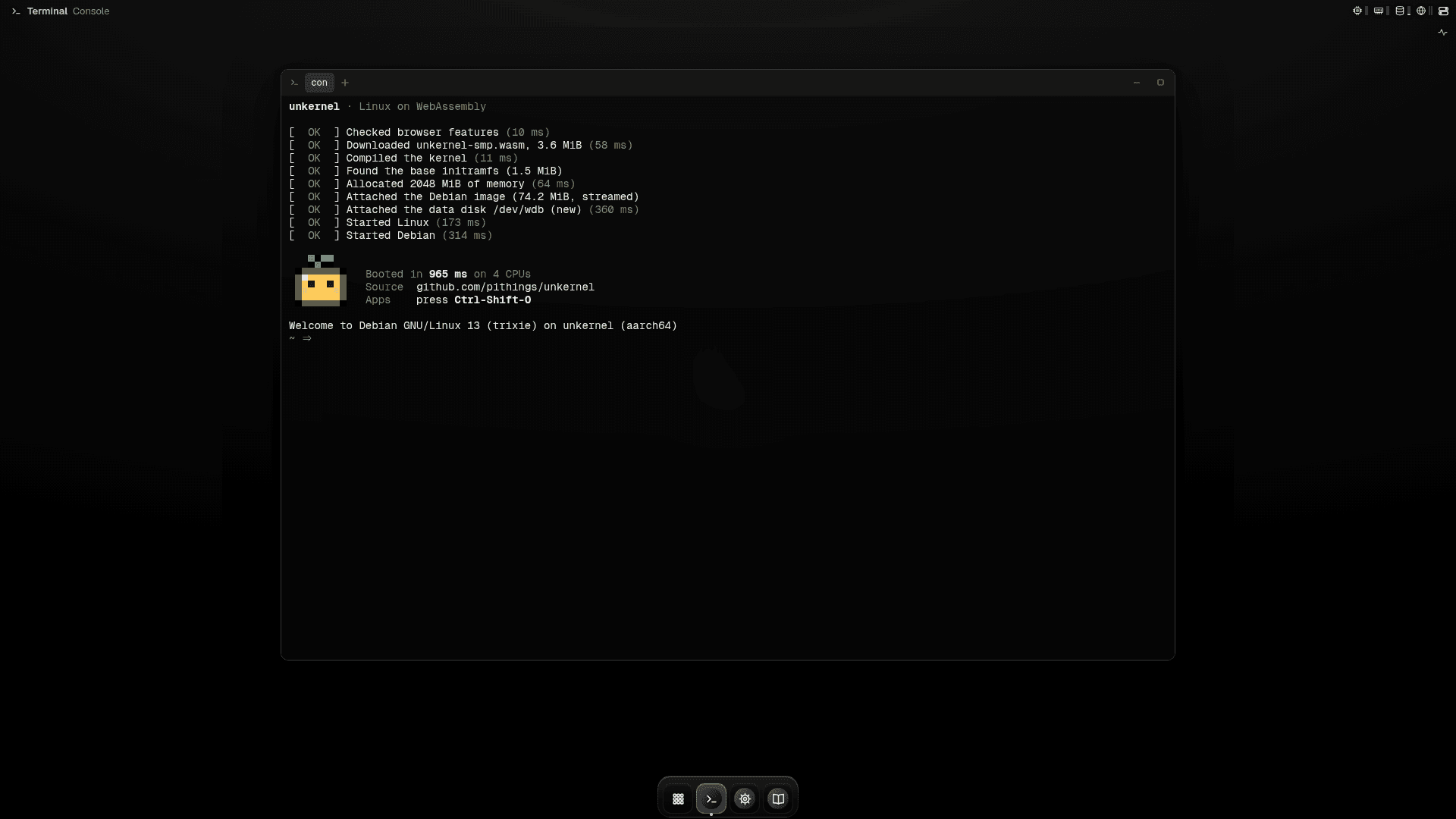
A real Linux kernel compiled to WebAssembly that boots to a shell in the browser or Node in under a second.
At a Glance
Core unkernel (Linux kernel compiled to WebAssembly) under GPL-2.0, free to use in the browser, via CLI, or embed via MIT-licensed SDK; no pricing or license key.
Engagement
Available On
Alternatives
Listed Nov 2026
About unkernel
unkernel is an open-source project by Pooya Parsa (pi0) that compiles Linux 7.x into a single WebAssembly module with a real MMU. It runs unmodified aarch64 Linux binaries, so Alpine and Debian packages work as they are, in a browser tab, from the terminal with npx unkernel, or from a JavaScript SDK. The project documents a browser desktop at unkernel.dev, and the latest release listed is v0.2.0-261127-3b71fa5.
What It Is
unkernel is a Linux-in-the-browser runtime. The kernel itself (syscalls, scheduler, memory management, ext4, TCP/IP) is compiled to wasm rather than emulated. Only user programs are emulated, on kwemu, an aarch64 CPU written in Zig and linked into the kernel. Opening the page gives a Linux machine with a shell, a package manager, a persistent disk, internet access, and a screen with sound. It runs on the user's device with no server.
How It Works
kwemu walks the kernel's own page tables, so memory management is done by the real Linux code. A syscall returns from kwemu to the kernel, which handles it as native wasm, and task switches use JSPI. Hot user code goes through a JIT that compiles blocks to wasm. Devices are small paravirtual drivers (block, network, display, input, sound, vsock, shared memory) that talk to the JavaScript host. The project says it uses real file systems (ext4, overlayfs, tmpfs, FUSE, 9p), cgroups and namespaces, and Linux's own TCP/IP stack, reaching the internet through host sockets or a Wisp proxy.
Ways to Use It
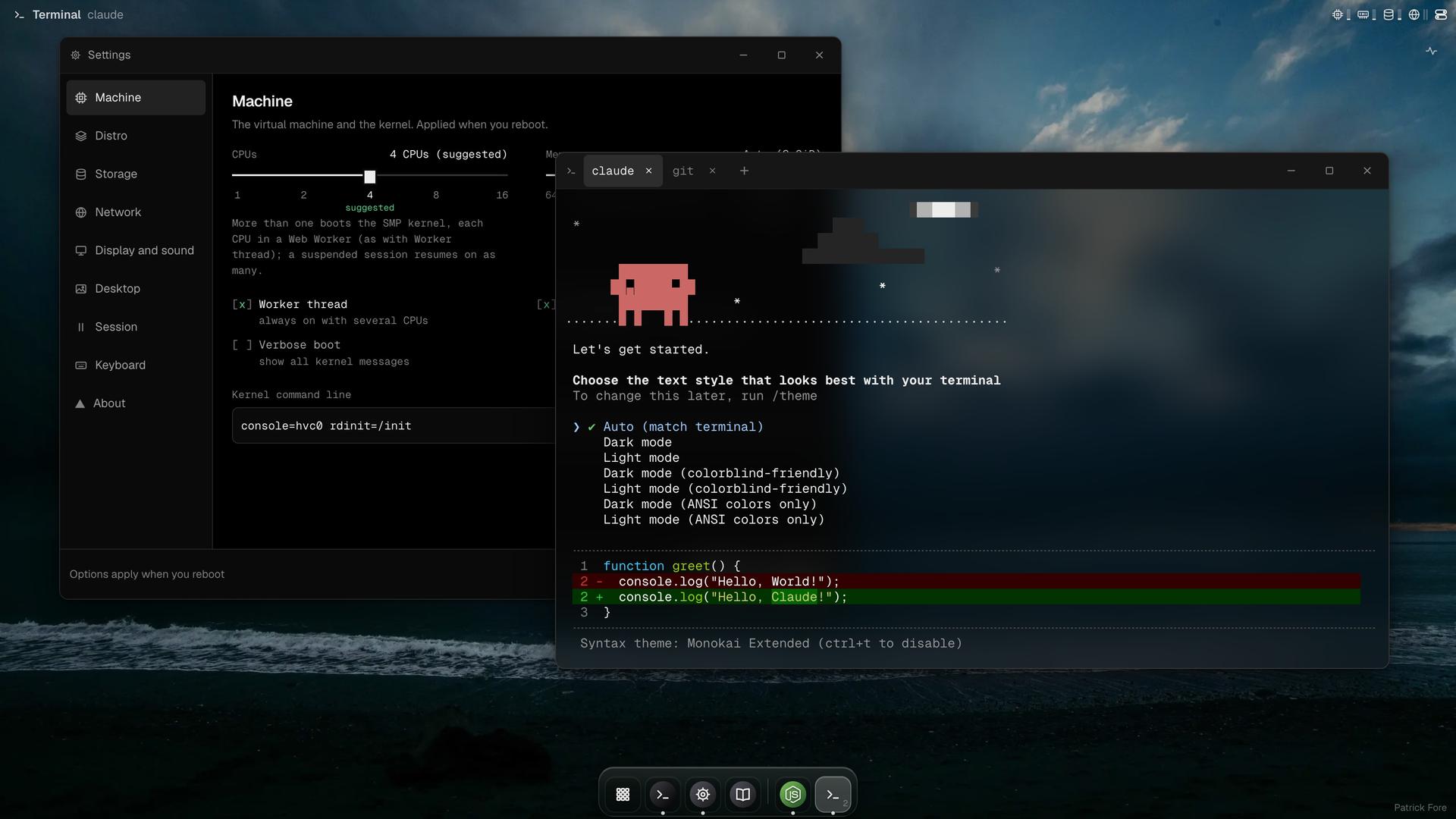
- Browser desktop with terminal windows, an app launcher, Wayland apps, settings for CPUs, memory, distro, disk and network, and Alpine or Debian images.
- CLI:
npx unkernelboots Alpine, with options for Debian, a persistent data disk, directory mounts, port forwarding, display and sound, and scripted input with exit codes. - Zero-dependency TypeScript SDK (
npm install unkernel) for Node and browsers, with exec and spawn, pty sessions, disks, mounts, vsock, shared memory, display and sound, and guest GL and Vulkan.
Requirements and Known Limits
unkernel needs JSPI: Node 24+, Chrome/Edge 137+, Firefox 153+, or Safari 27+. The README lists limits including no IPv6, no UDP beyond DHCP and DNS, no inbound network connections, and CPU-heavy programs running well behind native. The project is GPL-2.0-or-later, with the JavaScript SDK and page under MIT.
Community Discussions
Be the first to start a conversation about unkernel
Share your experience with unkernel, ask questions, or help others learn from your insights.
Pricing
Open Source
Core unkernel (Linux kernel compiled to WebAssembly) under GPL-2.0, free to use in the browser, via CLI, or embed via MIT-licensed SDK; no pricing or license key.
- License: GNU General Public License v2.0 (GPL-2.0) for the core kernel
- JavaScript SDK is MIT-licensed (LICENSE-MIT)
- Runs entirely on your device with nothing to install and no server
- No closed engine or license key
- Runs in browser, Node (npx unkernel), and via SDK
Capabilities
Key Features
- Real Linux 7.x kernel compiled to WebAssembly with a real MMU
- Runs unmodified aarch64 Alpine and Debian binaries
- JIT compiling hot aarch64 user code to wasm
- Persistent ext4 data disk saved in the browser
- Internet access via host sockets or Wisp proxy
- Framebuffer display, input devices and ALSA sound
- Guest GL via virgl on WebGL2 and Vulkan via WebGPU
- Wayland app windows through wland
- Multi-CPU SMP kernel using Web Workers
- CLI with disk, mount, port-forward and scripted input options
- Zero-dependency TypeScript SDK for Node and browsers
- Host directory mounts over 9p, vsock streams and shared memory