
Viseron
Self-hosted, local-only NVR and AI computer vision software with object detection, motion detection, face recognition, and license plate recognition.
At a Glance
About Viseron
Viseron is a self-hosted, local-only Network Video Recorder (NVR) and AI computer vision platform built by Jesper Nilsson (GitHub: roflcoopter) and released under the MIT License. It runs entirely on your own hardware via Docker, keeping all video processing and data on-premises with no cloud dependency. The project is actively maintained, with the latest release (v3.5.3) published in April 2026.
What It Is
Viseron is an open-source NVR platform that combines traditional continuous video recording with AI-powered computer vision capabilities. It is designed for home, office, or any surveillance use case where privacy and local control matter. Users configure it through a config.yaml file edited via a built-in web interface, and extend its functionality through a modular component system.
Core AI Capabilities
Viseron's feature set is driven by pluggable components that can be mixed and matched:
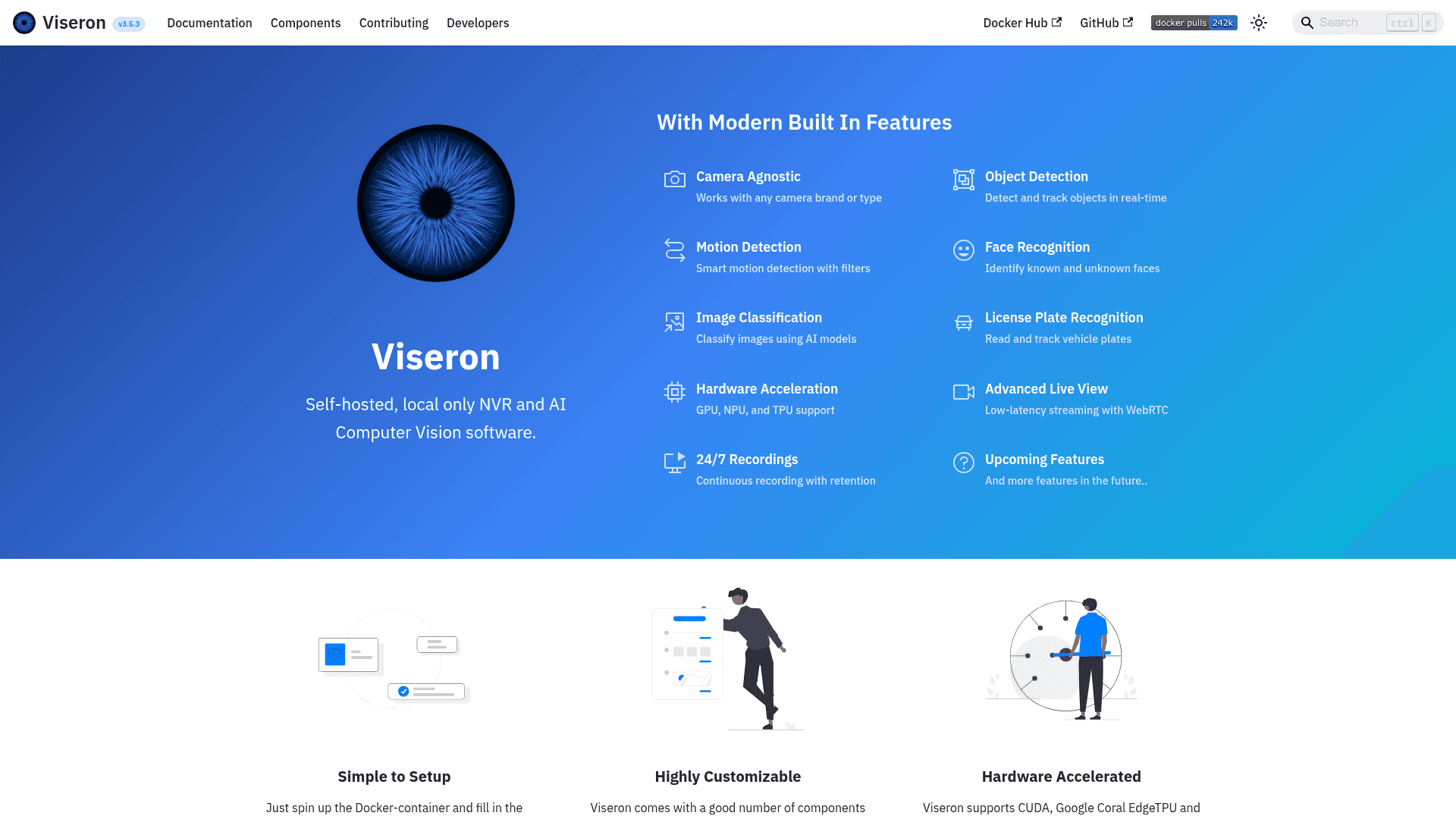
- Object Detection – Real-time detection and tracking using models like YOLO and Darknet
- Motion Detection – Smart motion detection with configurable filters
- Face Recognition – Identify known and unknown faces
- Image Classification – Classify images using AI models
- License Plate Recognition – Read and track vehicle license plates
- Advanced Live View – Low-latency streaming via WebRTC
Hardware Acceleration Support
Viseron is built to take advantage of dedicated AI accelerators and GPUs, reducing CPU load and improving inference speed. Supported hardware includes:
- NVIDIA CUDA GPUs
- Google Coral EdgeTPU
- NVIDIA Jetson Nano
- NPU and TPU devices
This makes it practical to run demanding AI workloads on edge hardware without a powerful server.
Deployment Model
Viseron is distributed as a Docker container, making setup straightforward across Linux-based systems. Users spin up the container, configure it via the integrated YAML editor in the web UI, and select the components they need from the Component Explorer. The platform is camera-agnostic, supporting any RTSP-capable IP camera regardless of brand.
Update: v3.5.3 – Recording Video Controls Visibility
The latest release, v3.5.3 (published April 30, 2026), is named "Recording video controls visibility," indicating continued active development focused on the UI and recording experience. The repository on GitHub shows ongoing commits to the dev branch as recently as May 2026, with 3,143 stars and 384 forks, reflecting a healthy open-source community. The project also participates in Hacktoberfest and welcomes contributions via its issue tracker and discussion forums.
Community Discussions
Be the first to start a conversation about Viseron
Share your experience with Viseron, ask questions, or help others learn from your insights.
Pricing
Open Source
Fully free and open-source under the MIT License. Self-hosted via Docker.
- Object detection
- Motion detection
- Face recognition
- License plate recognition
- Hardware acceleration
Capabilities
Key Features
- Object detection and tracking
- Motion detection with filters
- Face recognition
- Image classification
- License plate recognition
- Hardware acceleration (CUDA, Google Coral EdgeTPU, Jetson Nano)
- Low-latency WebRTC live view
- 24/7 continuous recording with retention
- Camera-agnostic RTSP support
- Modular component system
- Built-in YAML config editor
- Docker-based deployment
- Self-hosted and local-only