To organize the world's information and make it universally accessible and useful.
At a Glance
- Individual consumers
- Small and medium businesses
- Large enterprises
- Government and public sector
- +1 more
AI Tools by Google
(8)
Android Studio
Android IDE with Gemini AI

Google Agent Skills
Prebuilt Skills for Google AI Agents

Google AI Studio Mobile
Google AI Studio Mobile App

Gemini Spark
Google Personal AI Agent

Gemini in Android Studio
Coding Agent for Android Studio

Google AI Essentials
Google AI Skills Course
Google Colab
Cloud Jupyter Notebooks with GPU

Kaggle
AI ML Competition Platform
Discussions

Dev Highlights from Google I/O 2026
Logan Kilpatrick's line from Tuesday's developer keynote, framing the new managed-agents API: "Honestly, it feels like the hottest new programming language is markdown, and I'm here for it." He got a chuckle. The rest of the morning made it look like a thesis. Who this matters for: developer-tool ma…
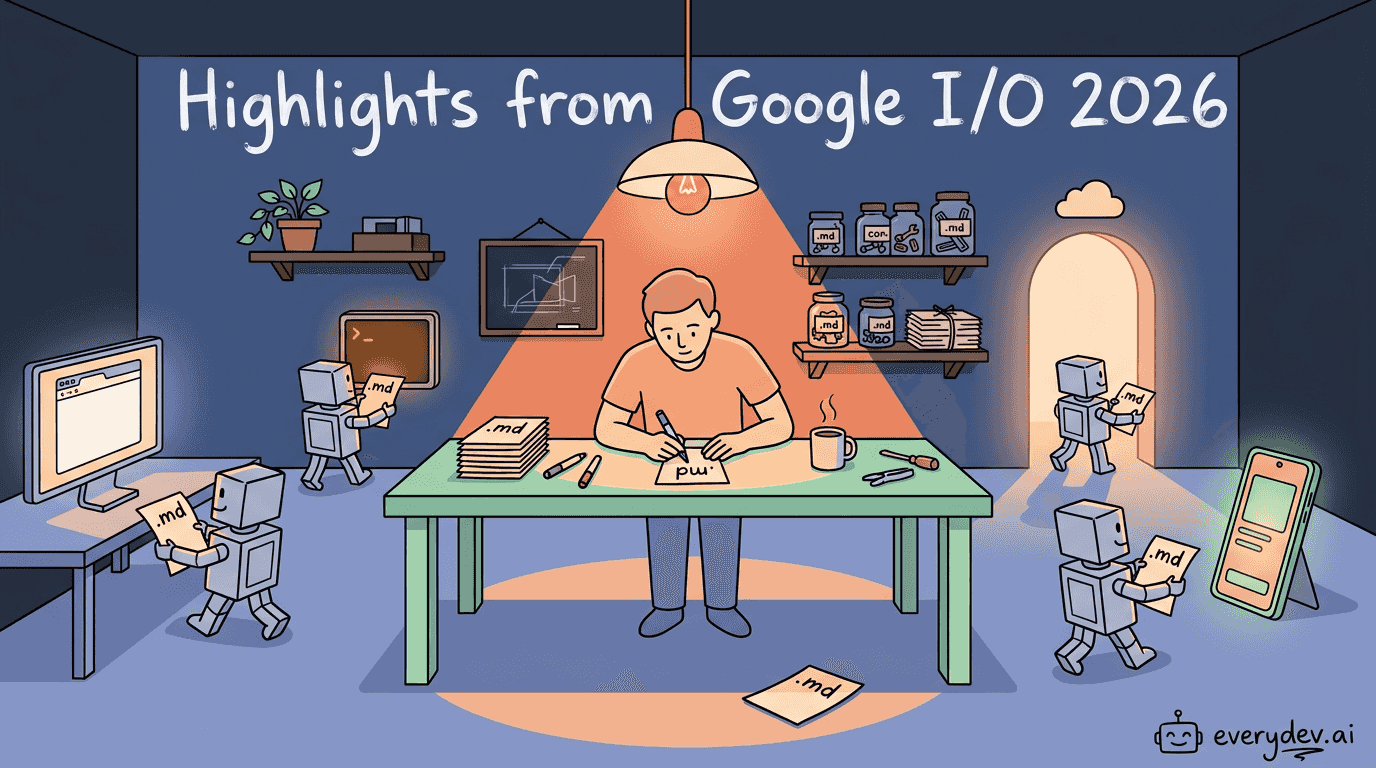

Google I/O is next week, May 19-20
So Google I/O is next week, May 19-20, and the thing nobody's quite saying out loud is that this isn't a model-release I/O. Gemini 3.1 Ultra already shipped back in April. That means the whole show is about dev tools, not a new model on stage. If you only watch one thing, watch the Developer Keynote…

Latest News
Alphabet Pivots Aggressively Toward Enterprise AI Following Cloud Next Product Launches
Is Alphabet Stock a Buy Ahead of Q1 2026 Earnings Release on April 29?
Google to invest up to $40B in Anthropic in cash and compute
Hut 8 Readies High-Grade Bond Sale For Google-Backed Data Center
Products & Services
The world's most widely used web search engine.
Free email service with large storage and search capabilities.
Open-source mobile operating system.
Fast and secure web browser.
Market Position
Dominant leader in search and digital advertising; top-tier cloud provider competing with AWS and Azure; leader in AI research and deployment.
Leadership
Founders
Larry Page
Computer scientist and entrepreneur. Co-founded Google while a PhD student at Stanford University.
Sergey Brin
Computer scientist and entrepreneur. Co-founded Google with Larry Page at Stanford. Previously worked on the Backrub search engine.
Executive Team
Sundar Pichai
CEO of Google and Alphabet
Previously served as Google's Product Chief. Led product management and innovation for a suite of Google's consumer products.
Ruth Porat
President and Chief Investment Officer
Former CFO of Alphabet and Google. Previously Executive Vice President and CFO of Morgan Stanley.
Board of Directors
Founding Story
Google began in January 1996 as a research project by Larry Page and Sergey Brin when they were both PhD students at Stanford University. The search engine was originally nicknamed 'Backrub' because the system checked back-links to estimate the importance of a site. They eventually changed the name to Google, a play on the mathematical expression for the number 1 followed by 100 zeros, reflecting their mission to organize a vast amount of information.
Business Model
Revenue Model
Primarily advertising (Search, YouTube, Network), alongside Cloud subscriptions, Workspace licenses, and hardware sales.
Pricing Tiers
Custom email, 30GB storage, 100-participant meetings.
2TB storage, 150-participant meetings with recording.
5TB storage, 500-participant meetings, enhanced security.
Unlimited storage, S/MIME encryption, premium support.
Target Markets
- Individual consumers
- Small and medium businesses
- Large enterprises
- Government and public sector
- Software developers
- Information retrieval and web search
- Enterprise productivity and communication
- Mobile application development
- Cloud computing and data analytics
- AI model training and deployment
- Salesforce
- The Home Depot
- PayPal
- Whirlpool