AgentsMesh
AI agent workforce platform for running, isolating, and coordinating many terminal-based AI coding agents on self-hosted runners from one console.
At a Glance
About AgentsMesh
AgentsMesh is a platform for orchestrating AI coding agents such as Claude Code, Codex CLI, Gemini CLI, and Aider across a team. Agents run in isolated pods on self-hosted runners, and users monitor and steer them from web, desktop, and iOS consoles. The repository is published under the Business Source License 1.1, and the latest listed release is Runner v0.44.7.
What It Is
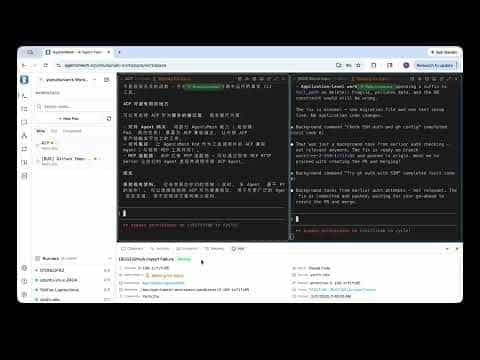
AgentsMesh is a control layer for running many terminal-based AI agents at once. Users install a Runner daemon on their own machines, then create AgentPods from a console. Each pod has a PTY terminal, a dedicated Git worktree sandbox, and a real-time output stream. Any terminal-based agent can run; built-ins include Claude Code, Codex CLI, Gemini CLI, Aider, and OpenCode, with custom agents supported via MCP.
How the Workflow Operates
Tickets on a Kanban board can be bound to pods, with MR/PR tracking and CI status. Agents can claim a ticket, create a branch, and open a merge request. Mesh and Channels let pods communicate through channels with @mentions and show a live collaboration topology. Autopilot uses a control agent to watch a pod and send the next instruction when it goes idle, with iteration caps, decision history, and human takeover. LOOP schedules recurring tasks such as dependency updates, security scans, and code reviews, with Slack/webhook alerts.
Architecture and Data Control
The control plane runs over gRPC with mTLS, while terminal I/O streams through a stateless Relay cluster. The backend is written in Go, and a shared Rust core serves the Next.js web console, the Electron desktop app, and the SwiftUI iOS app. Code stays on the user's infrastructure, and the platform uses a bring-your-own-key model for AI API keys.
Deployment Options
The hosted service at agentsmesh.ai is the quickest way to start. The full stack can also run locally via Docker Compose for development, and a self-hosted deployment guide is provided. The enterprise page lists multi-tenancy, audit logs, RBAC, and GitLab, GitHub, and Gitee integration. SSO, monitoring, backup and disaster recovery, and air-gapped support are marked coming soon.
Community Discussions
Be the first to start a conversation about AgentsMesh
Share your experience with AgentsMesh, ask questions, or help others learn from your insights.
Pricing
Free trial
30-day free trial of the Based plan
Based
Start solo. See what one agent can do.
- 1 seat (solo mode)
- 5 concurrent agents
- 1 Runner
- 5 repositories
- Community support
- BYOK (Bring Your Own Key) with no usage limits
Pro
Your first agent team. Up to 5 seats, 10 agents in parallel.
- Up to 5 seats
- 10 concurrent agents
- 10 Runners
- 10 repositories
- Priority email support
- Multi-Git provider support
- BYOK (Bring Your Own Key) with no usage limits
Team
Department-scale. 50 seats with their own agent squads.
- Up to 50 seats
- 50 concurrent agents
- 100 Runners
- Unlimited repositories
- Priority support
- BYOK (Bring Your Own Key) with no usage limits
On-Premise
Full private deployment on your own infrastructure.
- Unlimited seats
- Unlimited agents
- Unlimited Runners
- Air-gapped support
- Dedicated support
- Custom SLA
- White-glove onboarding
Capabilities
Key Features
- AgentPod isolated workspaces with Git worktree per agent
- Browser-based real-time terminal streaming
- Self-hosted runner fleet
- Mesh and Channels with @mentions and topology map
- Autopilot control agent with human takeover
- Kanban tickets bound to pods with MR/PR tracking
- LOOP scheduled agent tasks
- BYOK API keys
- gRPC mTLS control plane and Relay data plane
- Multi-tenant organizations, RBAC and audit logs
- MCP tools for agents
Integrations
Demo Video