Canonry
Open-source, self-hosted AEO platform that tracks AI answer mentions and citations alongside search and server data, with CLI, REST, MCP and webhook access for agents.
At a Glance
Self-hosted Canonry core under the MIT license (Canonry 5.0.0 and later); users bring their own provider API keys and host it themselves.
Engagement
Available On
Listed Nov 2026
About Canonry
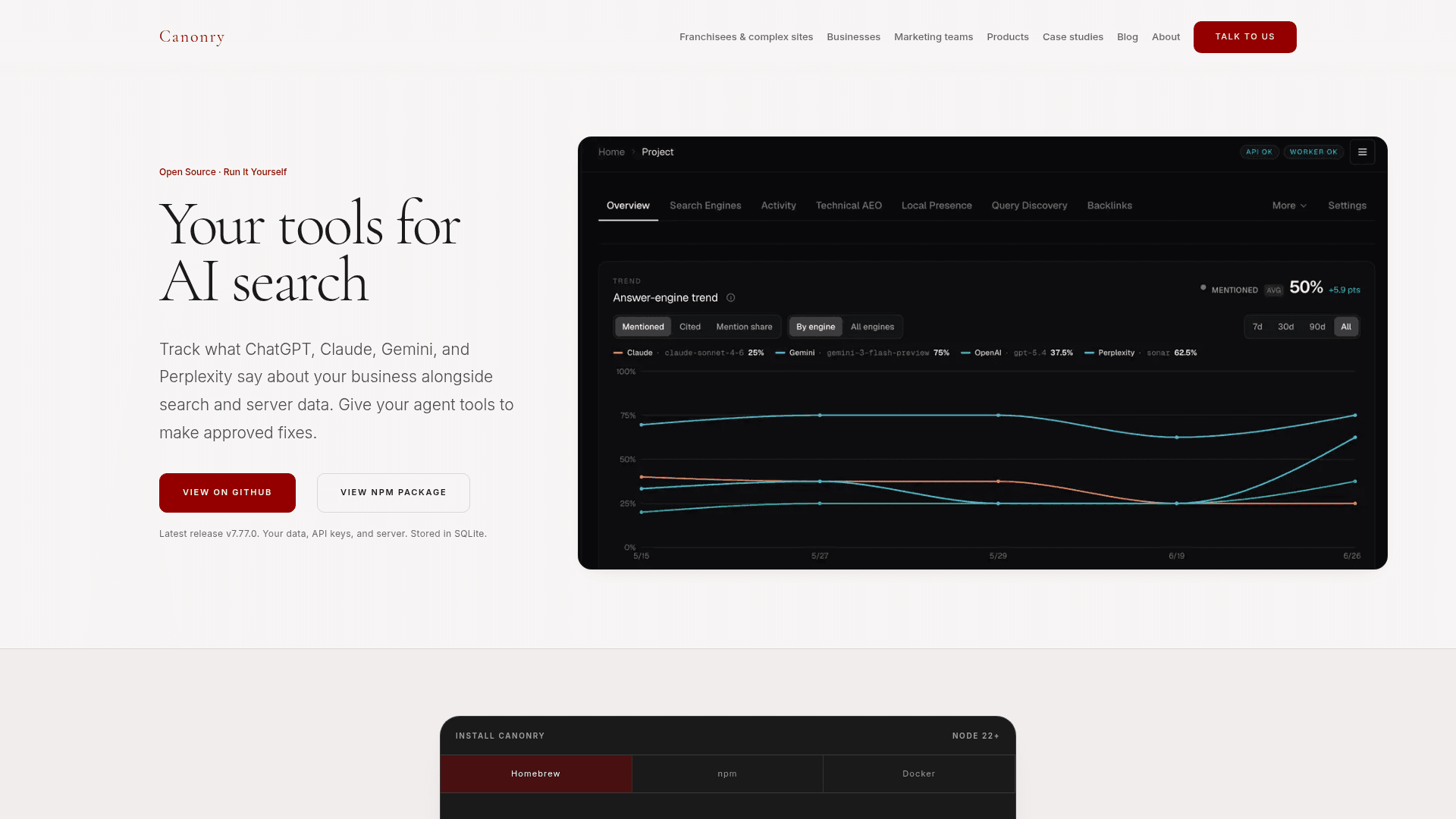
Canonry is an open-source, self-hosted platform from Canonry (formerly AI NYC) for tracking how AI answer engines such as ChatGPT, Claude, Gemini and Perplexity mention and cite a business. It combines that evidence with search, analytics and server traffic data, and exposes it through a web UI, CLI, REST API, MCP tools and webhooks. Project data is stored in SQLite and users bring their own provider API keys.
What It Is
Canonry is an agent-first answer engine optimization (AEO) operating platform. You run it on your own computer or server, add the queries that matter to a project, and schedule checks across AI providers. It records brand mentions and citations over time, shows which answers cite competitors but not your site, and lets you open the exact answers and URLs behind each result. It also runs bounded site health scans that produce a Page Health baseline.
How the Evidence and Actions Fit Together
The dashboard and a connected agent read the same project API. Evidence sources include Google Search Console, Bing Webmaster Tools, Google Analytics 4, Google Business Profile, server traffic from Cloudflare, Vercel, Cloud Run and WordPress, Common Crawl backlinks queried locally with DuckDB, and DataForSEO Labs keyword and ranking data. On the action side, Canonry supports WordPress publishing, JSON-LD structured data, and sitemap and URL submissions to Google, Bing and IndexNow. Scheduled data syncs and checks let you compare results after changes, and webhook alerts can go to Discord, Slack or other systems. The site notes that timeline comparisons show patterns and do not prove cause and effect.
Connecting Your Agent
Canonry does not replace an agent; it supplies evidence, tools and approval checks. Agents can use CLI commands with JSON output, a versioned REST API with an OpenAPI document, an MCP adapter, signed webhooks, or native Codex and Claude Code plugins. The site advises choosing either the native plugin or standalone MCP, not both. A bundled agent called Aero is also included.
Setup Path
Install with Homebrew, npm or Docker (Node 22+), then run bootstrap or init and start the server, and open the local setup page to scan a site. Provider keys for Gemini, OpenAI, Claude, Perplexity, Meta Muse, OpenRouter, Exa, Parallel or any OpenAI-compatible local model are configured separately. Canonry is single-tenant, so unrelated teams should use separate instances. Canonry 5.0 and later are MIT licensed.
Community Discussions
Be the first to start a conversation about Canonry
Share your experience with Canonry, ask questions, or help others learn from your insights.
Pricing
Open Source (Self-hosted)
Self-hosted Canonry core under the MIT license (Canonry 5.0.0 and later); users bring their own provider API keys and host it themselves.
- MIT license starting with Canonry 5.0.0; earlier releases retain their original licenses
- Self-hosted with SQLite storage
- Bring your own (BYOK) provider keys (external cost)
- CLI, REST API, MCP tools, webhooks, web UI
- Codex and Claude Code plugins
Capabilities
Key Features
- Tracks brand mentions and citations across AI answer engines over time
- Citation map by query and engine with exact answers and URLs
- Competitor gap analysis for answers that cite others but not your site
- Site health scans with Page Health baseline
- Google Search Console, Bing and GA4 data alongside AI visibility
- Server traffic analysis of AI bot visits and clicks from AI
- DataForSEO keyword, ranking and domain metrics
- Common Crawl backlink queries via DuckDB
- WordPress publishing, JSON-LD and indexing submissions
- Scheduled checks and data syncs
- Webhook alerts to Discord, Slack or other systems
- Portfolio and multi-market measurement plans with competitors
- CLI, REST API, MCP tools and webhooks
- Codex and Claude Code plugins
- Built-in Aero agent
- Self-hosted with SQLite and bring-your-own provider keys
Integrations
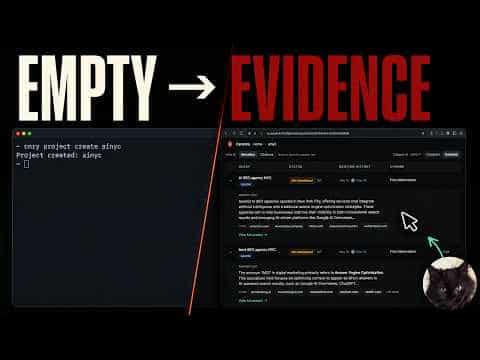
Demo Video