Cordane
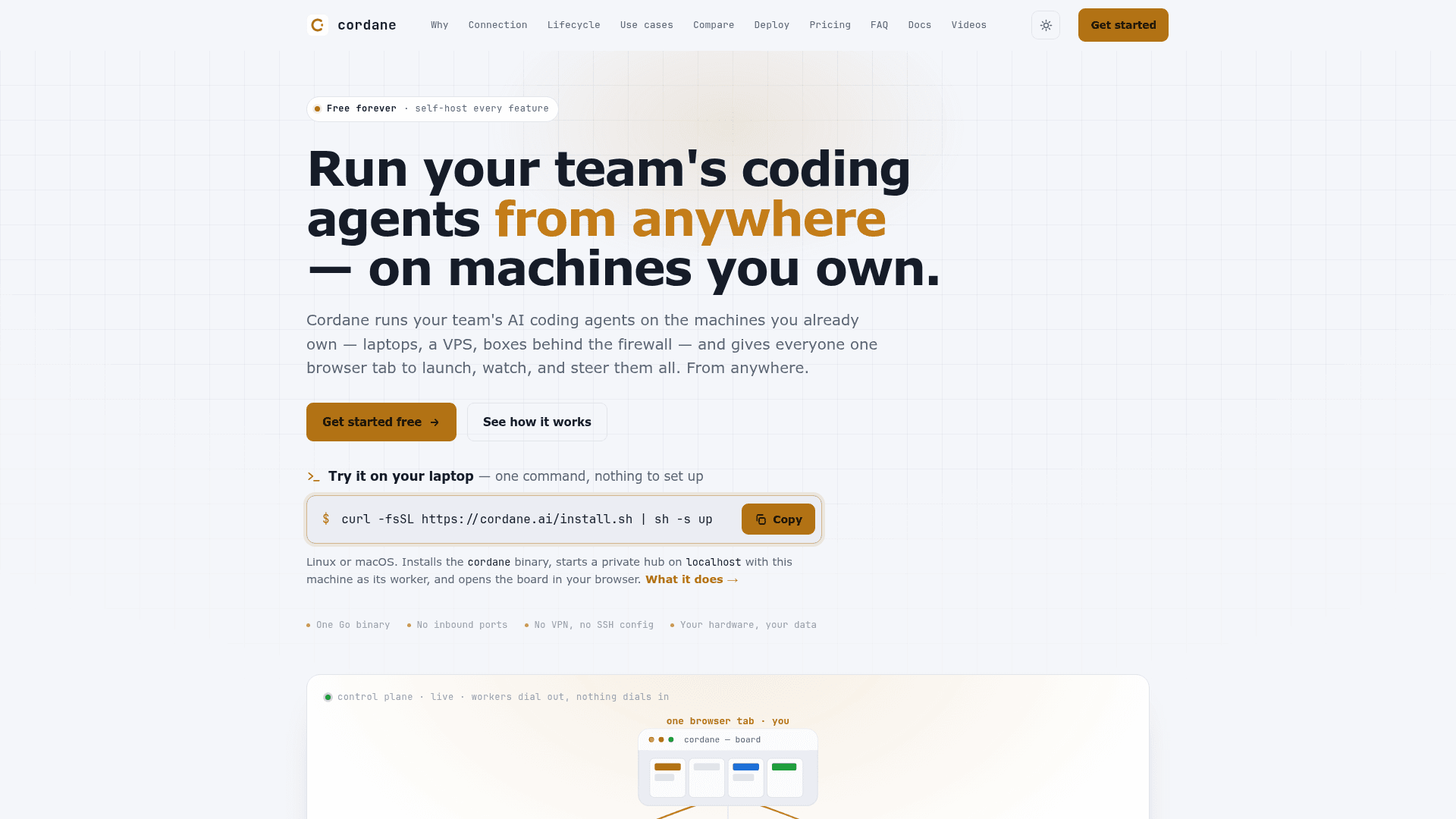
Self-hostable hub that runs your team's AI coding agents on machines you own and lets you drive them from one browser tab.
At a Glance
About Cordane
Cordane, built by Sitedity SRL, is a hub-and-worker system for running AI coding agents on hardware you own. A browser-based hub provides a shared kanban board, terminals and live app previews, while workers on laptops, VPSs or machines behind a firewall run the agents, dev servers and code. Self-hosting is offered with every feature, and Sitedity also offers a managed hub.
What It Is
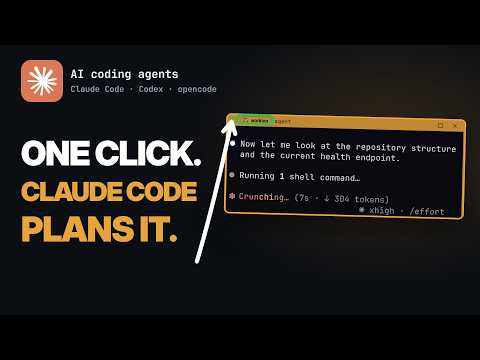
Cordane is a control plane for coding agents. The hub is opened in a browser; workers are Linux or macOS machines that dial out to the hub over a single outbound WebSocket, so no inbound ports, VPN or SSH configuration are needed. It runs any CLI agent in a real terminal, including Claude Code, Codex, opencode and pi, and agent API keys stay on the workers.
From Ticket to Review
A ticket on the shared board becomes a fresh git worktree cut from main, with its own reserved block of ports and a workspace of terminals. The agent writes a plan, then implements it and commits on the ticket branch. The review stage shows a commit log, a unified diff, check-hook results and a behind-main indicator. Reviewers can request changes with line notes, send failing checks back to the agent automatically, race two or three agents on one ticket, and push a branch and open a PR. Dev servers started by an agent are reachable through a reverse proxy on isolated, authenticated subdomains.
Agent States and Integrations
An Agents page lists every agent pane across spaces and workers, grouped by state with those waiting on a person first. Claude Code reports state through opt-in lifecycle hooks; other agents are read from the screen and default to idle when unrecognised. Tickets can be imported from Sentry, Jira, GitHub Issues and Linear. A built-in MCP server lets agents read tickets, comment, attach files, file follow-ups and request a human, and personal API tokens expose it to outside MCP clients. Alerts go to browser notifications, webhooks (ntfy, Slack, Discord) or email.
Deployment Model
The hub runs as a single Go binary or Docker containers, with sign-in through GitHub. Workers need git, and optionally Docker for sandboxed agents. Cordane states that code, secrets and compute stay on the workers even with the managed hub, and that app and profile secrets are AES-256-GCM encrypted in the database.
Community Discussions
Be the first to start a conversation about Cordane
Share your experience with Cordane, ask questions, or help others learn from your insights.
Pricing
Community
Whole product self-hosted for solo work, no license key, no expiry.
- Every feature included
- 1 worker, 1 project, 2 users
- Up to 3 concurrent agent runs
- No license key and no phone-home
Free trial
14-day free trial of managed cloud hub.
Cloud
Managed hub with self-hosted workers; $39/month includes 3 seats.
- Managed hub — automatic TLS, backups & upgrades
- 3 seats included, then $15 / additional seat
- Code, secrets & compute stay on your workers
- $19 per user / month
Capabilities
Key Features
- Shared kanban board for coding-agent tickets
- Git worktree and reserved ports per ticket
- Workers dial out over one outbound WebSocket
- Live app previews on isolated authenticated subdomains
- Agents page showing which agent is waiting on you
- Diff review with line-note change requests and auto-fix on failing checks
- Race 2-3 agents on one ticket
- Built-in MCP server for agents and external clients
- Ticket import from Sentry, Jira, GitHub Issues and Linear
- Alerts via browser, webhook and email
- File transfer between browser and worker
- Encrypted secrets at rest
- Self-hosted or managed hub
Integrations
Demo Video