
Gobii
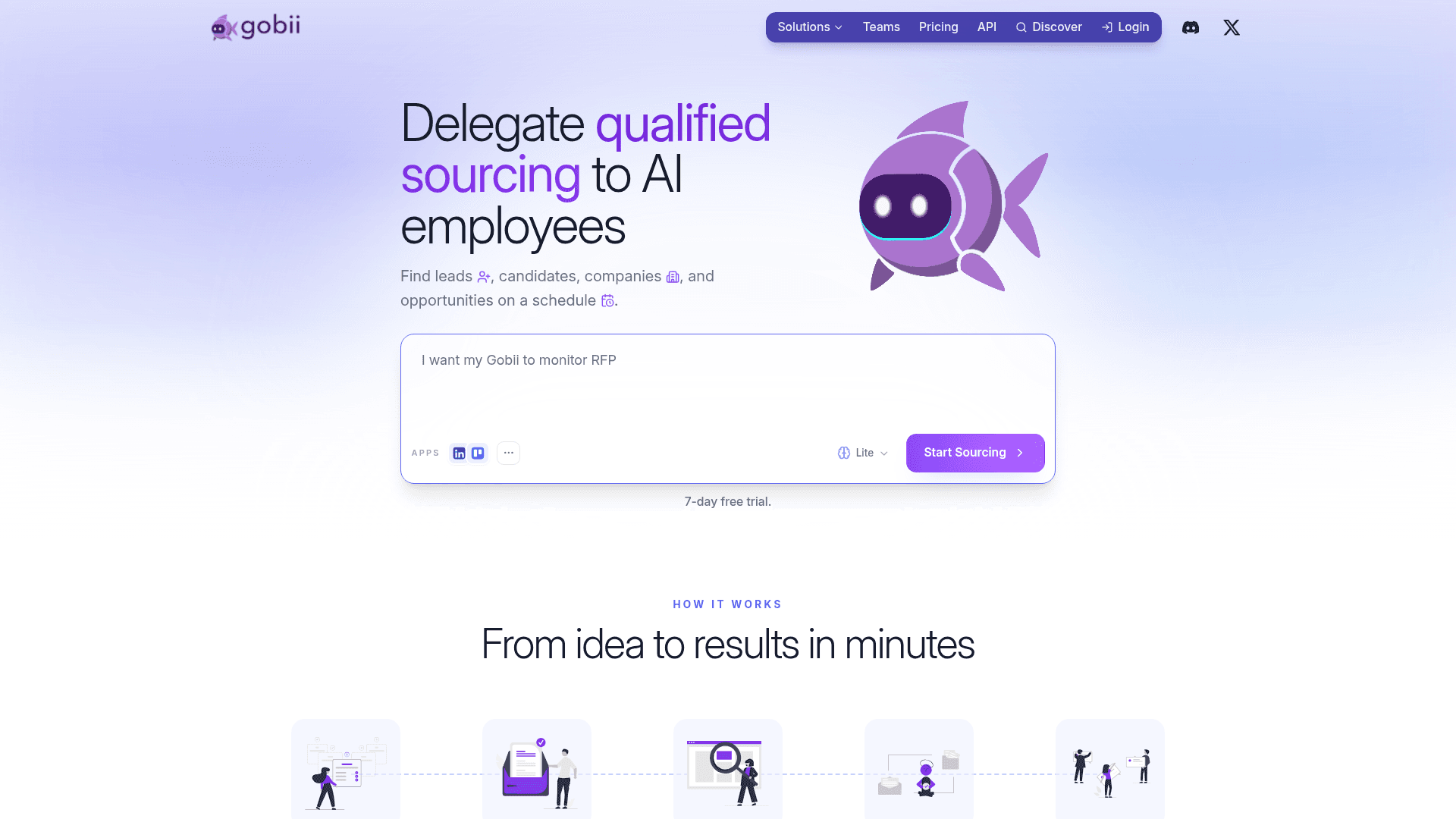
Gobii is an open-source AI employee platform that gives businesses always-on autonomous agents capable of browser automation, web research, data collection, and workflow execution.
At a Glance
About Gobii
Gobii is an AI employee platform built for teams that need durable, always-on autonomous agents running in production. The core platform is open-source under the MIT license and available for self-hosting, while a managed cloud version is offered at gobii.ai. Founded by Andrew I. Christianson — a former NSA contractor and multi-time SaaS founder — and backed by Open Core Ventures, Gobii is purpose-built for secure, governed, team-scale agent operations rather than single-user personal assistant workflows.
What It Is
Gobii is an AI agent platform that treats each agent as a virtual employee rather than a disposable task runner. Every agent can be assigned its own name, email address, and phone number, making it directly contactable by human teammates. Agents wake from schedules and external events (email, SMS, webhooks, API calls), execute browser-based and API-driven work, maintain persistent structured state, and reply with results — all without human intervention. The platform is built on top of browser-use and adds a full production runtime layer: durable event queues, per-agent schedule state, encrypted secrets, proxy-governed egress, and Kubernetes/gVisor sandbox compute support.
How Agents Work
Gobii agents follow a lifecycle designed for long-running, multi-turn workflows:
- Always-on triggers: Agents wake from cron schedules, inbound email/SMS, webhooks, or API calls and process work from a per-agent durable queue.
- Real browser execution: Each agent runs a headed browser with persistent profile handling and proxy-aware routing — navigating sites, logging in, filling forms, and extracting data exactly as a human would.
- Embedded database: Every agent maintains its own SQLite-backed structured state, functioning as an unlimited internal spreadsheet without requiring external tools.
- Deliverables: Agents generate PDFs, reports, charts, and CSV exports and can email them directly to team members or receive files in return.
- Agent-to-agent coordination: Linked agents can message each other natively, enabling multi-agent pipelines where research, enrichment, and outreach agents hand off work sequentially.
Deployment Model
Gobii supports two deployment paths. The self-hosted path uses the open-source MIT-licensed platform from GitHub, installed via a single curl command or manual Docker Compose setup, requiring Docker Desktop with at least 12 GB RAM. Users bring their own AI model providers — OpenAI, Anthropic, OpenRouter, Fireworks, or a custom endpoint. The managed Gobii Cloud path handles operations, scaling, and governed releases. For enterprise deployments, dedicated infrastructure, SLAs, and custom governance controls are available by arrangement.
Target Audience and Use Cases
Gobii is explicitly optimized for team and business operations rather than local personal assistant workflows. The platform's own documentation positions it against local-first tools by emphasizing cloud-native, secure, always-on execution. Documented production use cases include:
- Revenue ops: monitoring inboxes and web systems, updating CRM records, sending structured summaries
- Recruiting ops: sourcing candidates, enriching profiles, coordinating outbound messaging
- Sales: finding prospects, researching accounts, monitoring buying signals, preparing personalized outreach
- Support and success: triaging inbound channels, executing browser-backed actions, escalating with full state continuity
- Back-office automation: long-lived, trigger-driven workflows requiring durable memory and secure credential handling
Pre-built agent templates in the library cover categories including Team Ops, Research, External Intel, Operations, Risk & Compliance, Revenue, Sales, Recruiting, and People.
Update: Version 2.30.1
The GitHub repository shows active development with the latest release tagged as version 2.30.1, published in July 2026. The repository was created in August 2025 and has accumulated 483 stars and 80 forks as of the latest data. The project is listed as "early access" status in its GitHub badges. The platform's homepage notes it is "#1 on OpenRouter" — a vendor-published claim — and highlights its MIT open-source license and backing from Open Core Ventures. The sandbox compute server was recently consolidated into the main monorepo, and Kubernetes/gVisor sandbox compute support has been added as a production security feature.
Community Discussions
Be the first to start a conversation about Gobii
Share your experience with Gobii, ask questions, or help others learn from your insights.
Pricing
Free
Self-hosted, open-source agents on your own infrastructure with MIT license.
- Run on your own computer or server
- Bring your own AI models
- Always-on agents with browser automation
- Open source and MIT licensed
Pro
For growing teams needing managed always-on agents with priority support.
- 1,000 tasks included
- 7-day free trial
- 20 contacts/agent
- Unlimited always-on agents
- No time limit for always-on agents
- Agents never expire or turn off
- $0.10 per task beyond 1,000
- Priority support
- Higher rate limits
Scale
For teams scaling fast with higher task volumes and highest intelligence levels.
- 10,000 tasks included
- 7-day free trial
- 50 contacts/agent
- Unlimited always-on agents
- Agents never expire or turn off
- Highest intelligence levels available
- $0.04 per task beyond 10,000
- Priority work queue
- 1,500 requests/min API throughput
Team
For shared team workspaces with pooled credits, shared agents, and team billing.
- 1,000 pooled task credits per seat
- Shared agents and private templates
- Shared credentials, integrations, API keys, and secrets
- Roles, invites, and team billing
Enterprise
Custom enterprise agreements with dedicated infrastructure, SLAs, and governance controls.
- Dedicated infrastructure
- SLAs
- Custom governance controls
Capabilities
Key Features
- Always-on autonomous agents with schedule and event triggers
- Real browser automation with headed execution and persistent profiles
- Per-agent email and SMS identity endpoints
- Agent-to-agent native messaging and coordination
- Embedded SQLite database for persistent structured state
- PDF, CSV, chart, and report generation with email delivery
- Webhook-native integration model (inbound and outbound)
- Encrypted-at-rest secrets management
- Proxy-governed outbound egress
- Kubernetes/gVisor sandbox compute support
- Self-hostable via Docker Compose
- Pre-built agent templates for sales, recruiting, ops, and more
- CRM, ATS, and project tool integrations
- Multi-model support (OpenAI, Anthropic, OpenRouter, Fireworks, custom)
- REST API with browser-use task compatibility
- Human-in-the-loop workflow support
- Audit trails and compliance controls
- Batch scheduling and queueing