Hubzoid
Open-source, self-hostable platform that turns a folder of knowledge, rules and tools into internal AI agents for chat, workflows and MCP-connected assistants.
At a Glance
Apache-2.0 licensed self-hostable core product, including team controls. Runs on your own infrastructure.
Engagement
Available On
Listed Nov 2026
About Hubzoid
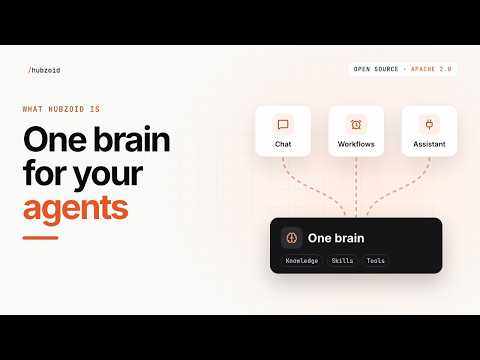
Hubzoid is an open-source platform for internal AI agents, published under the Apache 2.0 license. It turns a folder of a team's knowledge, rules, skills and tools into an agent that can be used in chat, repeatable workflows, and assistants such as Claude Code or Codex connected over MCP. The latest release listed on GitHub is v2.1.1.
What It Is
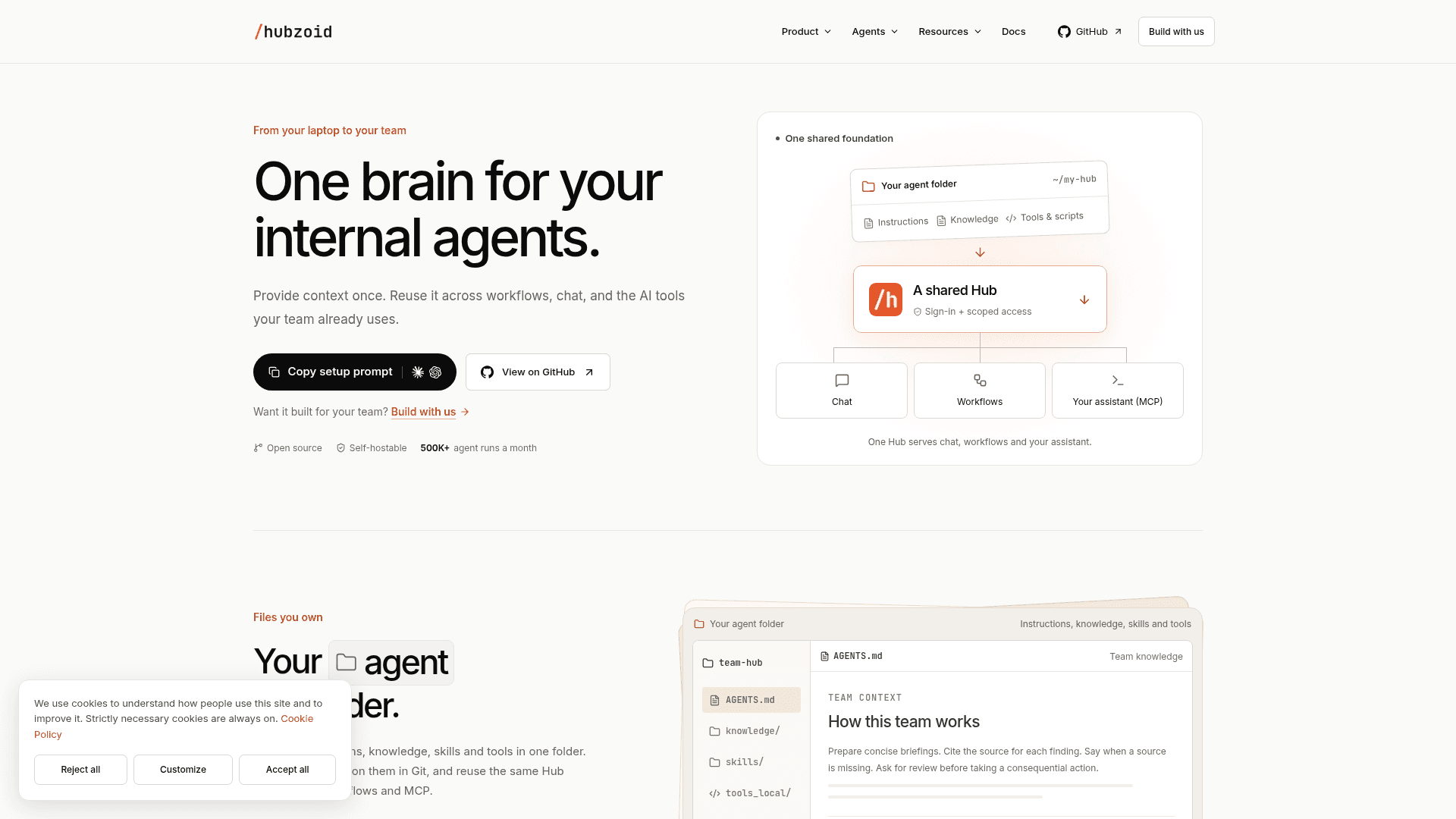
Hubzoid is built around the idea of a Hub: a folder, versionable in Git, that holds instructions (AGENTS.md), knowledge, skills, tools, scheduled tasks and evals as plain files. A bridge process checks who is asking, builds the agent from the Hub and runs it on the model you choose. The same Hub serves chat, workflows and MCP clients.
How the Hub Is Used
- Chat: ask questions and request actions in the web app, Slack, WhatsApp, Telegram, an embedded app or an OpenAI-compatible API, with answers that name their source files.
- Workflows: Markdown tasks and Python workflows run on a schedule, from a webhook, on request or from chat, with a run history.
- Assistants: Claude Code and other MCP clients connect after sign-in and consent and use the Hub's knowledge and tools with their own model.
- Evals: checks confirm the agent keeps answering correctly after rules change.
Team Controls and Hosting
For teams, Hubzoid adds sign-in, per-person and per-agent access, per-tool permissions checked before a tool runs, approvals before consequential actions, and a Settings area to inspect runs and usage. It runs on a laptop or a server you control, with SQLite by default or PostgreSQL. Documented deployment paths include Docker or Compose, a systemd VM and AWS; Railway and Maritime guides are described as written but not yet verified.
Ready-to-Use Agents
Starter hubs are available as separate repositories: Software Factory (engineering requests to reviewed draft pull requests), Engineering Desk (pull request review and code questions), Order & Invoice Desk (orders and invoices into sourced records), and Customer Desk (drafted customer replies for human review).
Setup Path
Install with pip (Python 3.11 or 3.12), run hubzoid init and hubzoid run, and the web app opens locally. Models can be Claude Code or Codex signed in on the machine, or OpenAI, Anthropic, Azure OpenAI or OpenRouter with an API key.
Community Discussions
Be the first to start a conversation about Hubzoid
Share your experience with Hubzoid, ask questions, or help others learn from your insights.
Pricing
Open Source (Self-hosted)
Apache-2.0 licensed self-hostable core product, including team controls. Runs on your own infrastructure.
- Apache License 2.0
- Team controls included in the open-source product
- Runs on infrastructure you control
- Chat, workflows and MCP assistant connection
- Runs on your existing Claude Code or Codex login, or a model API key (external cost)
Capabilities
Key Features
- Agent defined as a folder of Markdown instructions, knowledge, skills and tools, versionable in Git
- Chat in web app, Slack, WhatsApp, Telegram, embedded apps and OpenAI-compatible API
- Scheduled, webhook and on-demand workflows (Markdown tasks and Python)
- MCP server for connecting Claude Code, Codex, Hermes and other MCP clients
- Per-agent and per-tool access control with checks before tools run
- Approvals before consequential actions
- Evals to check answer quality
- Run history and usage visibility in Settings
- Self-hostable with Docker, systemd, AWS deployment
- Ready-to-use agents: Software Factory, Engineering Desk, Order & Invoice Desk, Customer Desk
Integrations
Demo Video