
Kiroshi
Open-source desktop app for keeping a team of local-first AI agents, built on Claude Code, that work in your tools with their own skills and memory.
At a Glance
About Kiroshi
Kiroshi is an independent, MIT-licensed desktop app run from France by Steve Puget. It lets you keep a roster of named agents, each with its own skills, memory, model, working directory and conversation history, stored in a local folder. Builds are available for macOS, Windows and Linux, and the vendor says a mobile version is coming.
What It Is
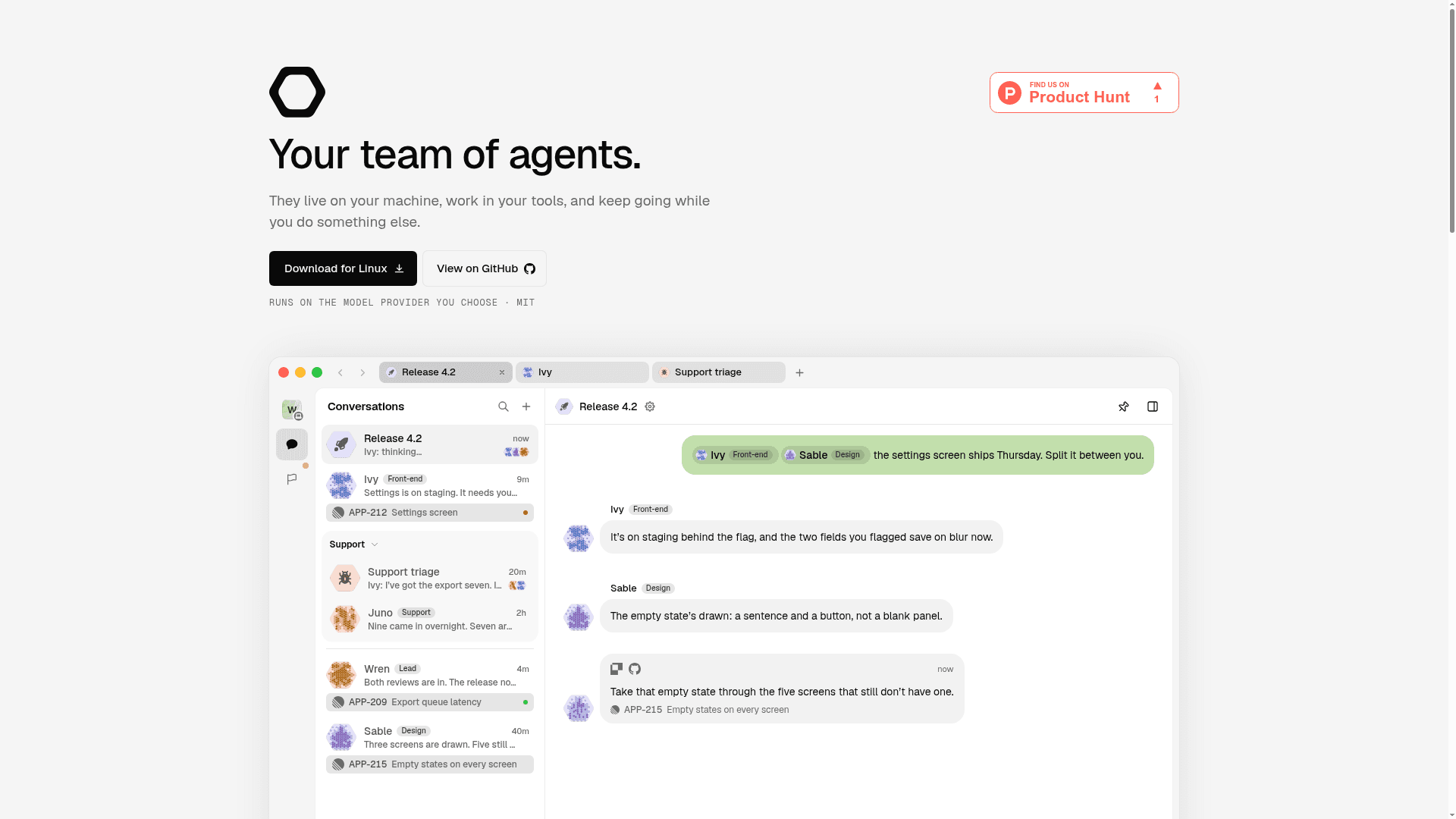
Kiroshi is a desktop app for Claude Code. You create bots, name and brief them, and group them into spaces such as Personal and Work, each with its own agents and keys. Conversations are stored locally and return on the next launch. Replies come from the model provider account you configure, such as a Claude subscription. Kiroshi bundles the Claude Code executable that answers, and it runs on your own sign-in.
Ways to Work With Agents
There are three modes. A conversation is one agent in one thread. A room seats several agents, and you @-mention the ones you need so they split the work. A mission is one objective an agent owns until it lands, with its own thread and a readable status. Every bot named in one message runs in the same wave, so one can work while you read another's output. Each bot can also delegate a self-contained job to a nested read-only agent.
Memory, Skills and Automation
Each bot owns a plugin directory with an agent file and skill files. When a bot writes there, the change is saved as a git commit that you can read and undo in its History. MCP servers are declared in .mcp.json and layered by system, space and bot, with environment variables stored outside the plugins. Routines are standing instructions fired by a cron schedule, a watched file change or a local webhook, and the report lands in the conversation. Approvals let you decide what an agent may run on its own and what waits for your yes.
Setup Path
Download the build for your platform from the releases page, or run from source with Bun and a Rust toolchain using the Tauri app. A signed-in Claude subscription is required, and no API key is used by the session Kiroshi opens.
Community Discussions
Be the first to start a conversation about Kiroshi
Share your experience with Kiroshi, ask questions, or help others learn from your insights.
Pricing
Local
Everything Kiroshi does, on your machine. Open source under the MIT license.
- Agents, skills and conversations
- Rooms, missions and routines
- Applications, Secrets and Approvals
- Spaces shared on your own network
- Requires your own model provider account (e.g. Claude subscription), an external cost
Pro
Takes your spaces online; free during the beta.
- Everything in Local
- Host a space for people who aren’t on your network
- Join a space someone hosts for you
- Kiroshi on your iPhone
- Free during the beta
- Billed per user
Capabilities
Key Features
- Named agents with their own model, working directory, skills and memory
- Conversations, rooms and missions
- Local-first storage of agents, skills and conversations
- Undoable agent learning via git-committed History
- Approvals for agent actions
- Spaces that keep Personal and Work separate
- Routines triggered by cron, file changes or webhook
- MCP servers declared per system, space or bot
- Scoped environment variables and secrets
- Delegation to nested read-only agents
- Applications integrating existing tools