Monako Glass
Monako Glass is a 48-gram AI-powered smart glasses device with waveguide display, bone conduction microphone, and MonoOS — designed as a professional workstation tool for developers and creators.
At a Glance
Engagement
Available On
Listed Jun 2026
About Monako Glass
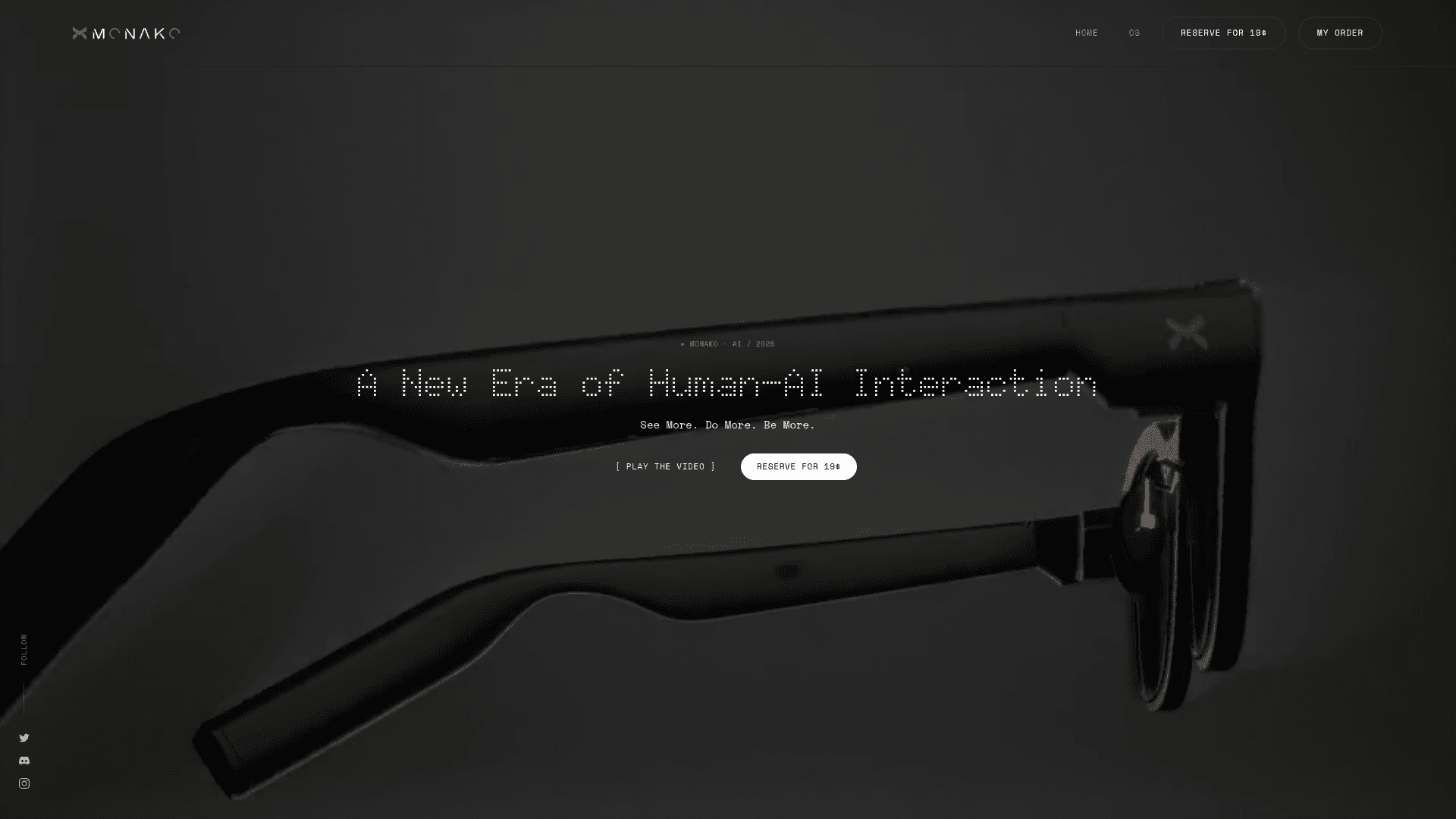
Monako Glass is an upcoming AI smart glasses product developed by Monako, targeting a 2026 launch. Weighing 48 grams, it combines a waveguide display, camera, speakers, and a bone conduction microphone into a wearable form factor aimed at professional developers and creators rather than casual consumers.
What It Is
Monako Glass is a wearable AI workstation device — smart glasses built for productivity rather than lifestyle use. The hardware pairs with MonoOS, a custom Linux-based operating system, to deliver an integrated environment for coding, creative work, and AI-assisted workflows. The device is positioned as a hands-free extension of a developer's existing toolchain, with connectors for tools like Claude Code, Codex, Unreal Engine, Blender, and After Effects.
Hardware Design
The glasses weigh 48 grams — comparable to standard sunglasses — with weight balanced toward the rear arms for all-day comfort. Key hardware components include:
- Waveguide display for heads-up visual output
- Bone conduction microphone that captures nasal vibrations rather than airborne sound, reducing environmental noise interference for voice input features like Typeless and Whisper Flow
- Camera and speakers integrated into the frame
- Vision Engine inspired by Vision Pro, translating micro gestures into digital commands
MonoOS: The Operating System
MonoOS is described by Monako as the world's first Linux distribution with a Lua-based application layer and an embedded Rive animation runtime. Key architectural choices include:
- LuaJIT application layer: Monako states each app requires only 200–500 KB of RAM, with performance competitive with JavaScript JIT runtimes and no build step required — enabling AI agents to generate and run apps on the fly
- Rive animation runtime: Embedded directly into the OS for lightweight, state-driven vector animations optimized for wearable hardware
- Hyper-personalized apps: Users can speak apps into existence and create server-backed experiences
- Seamless interop: Workflows span Monako Glass, cloud sandboxes, and local Mac/PC environments
Agent Terminal and Integrations
A core feature called Agent Terminal connects Monako Glass to AI coding and creative tools. Monako lists connectors for Claude Code, Codex, Unreal Engine, Blender, and After Effects, framing the device as a unified workstation that brings multiple professional tools into a single cohesive interface accessible from the glasses.
Current Status
Monako Glass is in a pre-launch reservation phase as of the available sources, with a stated target of 2026 for mass production. The product page offers a reservation option and a mailing list for updates on MonoOS iterations and software milestones. No shipping hardware or public OS release appears to be available yet.
Community Discussions
Be the first to start a conversation about Monako Glass
Share your experience with Monako Glass, ask questions, or help others learn from your insights.
Pricing
Reservation
Pre-launch reservation for Monako Glass hardware.
- Reserve a Monako Glass unit ahead of 2026 mass production launch
Capabilities
Key Features
- 48-gram waveguide display smart glasses
- Bone conduction microphone for voice input
- MonoOS Linux-based operating system
- LuaJIT application layer with minimal RAM footprint
- Embedded Rive animation runtime
- Agent Terminal with connectors for Claude Code, Codex, Unreal Engine, Blender, After Effects
- Vision Engine for micro gesture recognition
- Hyper-personalized app creation via voice
- Seamless interop across glasses, cloud, and local Mac/PC
- Camera and speakers integrated into frame