Opal
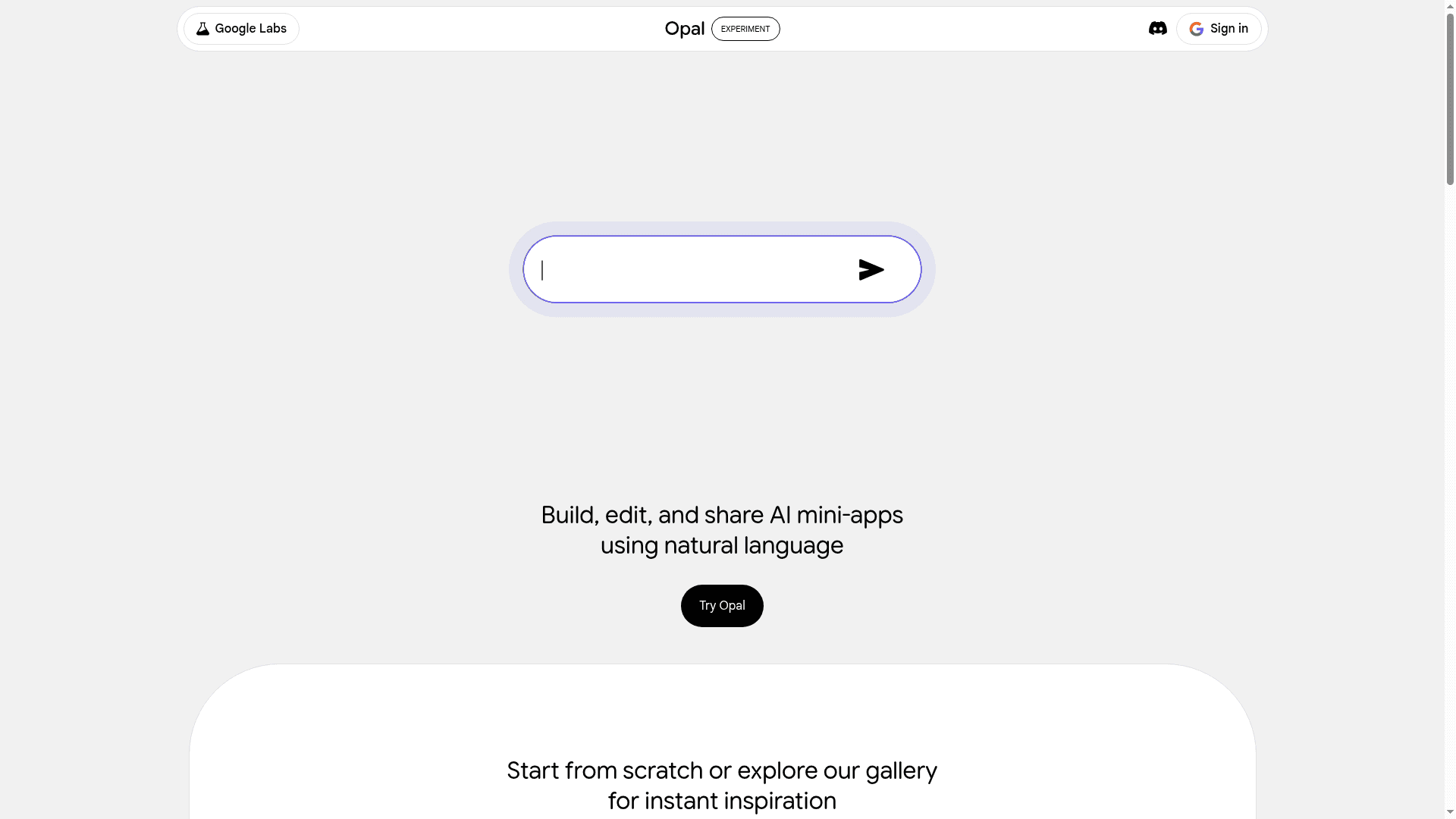
A Google Labs experiment that lets anyone build, edit, and share AI mini-apps using natural language and a node-based visual workflow — no coding required.
At a Glance
About Opal
Opal is a Google Labs experiment that enables anyone to build, edit, and share AI-powered mini-apps using natural language — no coding required. It is accessible via the web and backed by Google's AI infrastructure, positioning it as a rapid prototyping tool for non-developers and developers alike.
What It Is
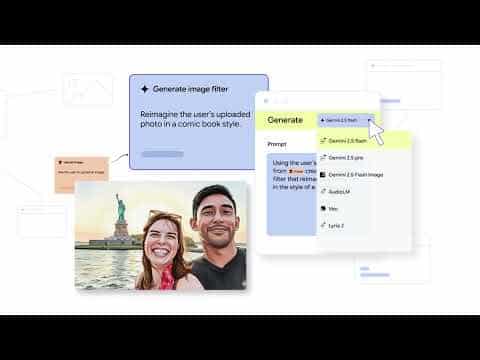
Opal is a no-code AI app builder that lets users describe what they want in plain language and receive a working mini-app in return. It combines a natural language interface with a node-based visual editor, so users can both generate and refine their app's logic without writing code. The tool is framed as an "Experiment" under Google Labs, meaning it is an early-stage, exploratory product rather than a fully productized offering.
How the Builder Works
Users can start from scratch by describing an app idea in natural language, or browse a curated gallery of pre-built templates for instant inspiration. The gallery includes examples such as:
- Book Recs — personalized book recommendations
- Business Profiler — an internet-presence summary for a business
- City Builder — a game concept with AI-generated visuals
- Fashion Stylist — outfit suggestions based on weather and occasion
- Generated Playlist — mood-based playlists with YouTube links
- Learning with YouTube — quiz generation from YouTube videos
- Product Research — personalized product reports
- Social Media Post — business post creation
- Video Marketer — AI video ads from product and audience inputs
- Blog Post Writer — topic research and blog post generation
Once a template or idea is selected, users can further edit the app's logic using an intuitive node-based workflow editor.
Audience and Use Cases
Opal targets creators, entrepreneurs, and non-technical users who want to bring app ideas to life quickly. The homepage emphasizes three core value propositions: no-code creation, rapid prototyping (turning ideas into working apps in minutes), and intuitive visual editing. It is also relevant to developers who want to prototype AI-powered workflows without writing boilerplate.
Deployment and Access
Opal is a web-based tool accessed via a Google account sign-in. It is part of Google Labs, the company's experimental product incubator. Community support and feedback are channeled through the Google Labs Discord server. Documentation is available via Google's developer portal.
Current Status
Opal is explicitly labeled an "Experiment" on its homepage, indicating it is in an early, exploratory phase. As a Google Labs project, it may evolve, be discontinued, or graduate to a full product over time. Users are encouraged to join the Discord community to share feedback and stay connected with the project's development.
Community Discussions
 JS
JSLet’s talk about Opal — Google’s new "vibe coding" tool
TL;DR: Opal lets you chain together generative AI steps visually to build interactive apps and media. Think: flowchart meets prompt chaining meets a no-code IDE. Opal is a fascinating case study in how Big Tech is trying to reimagine developer UX. But let’s break it down 👇 🧠 What is Opal? Opal is …
Pricing
Free
Free access to Opal as a Google Labs experiment. Sign in with a Google account to build, edit, and share AI mini-apps.
- Build AI mini-apps with natural language
- Node-based visual editor
- Gallery of pre-built templates
- Share mini-apps
- Community support via Discord
Capabilities
Key Features
- Build AI mini-apps using natural language
- No-code app creation
- Node-based visual workflow editor
- Gallery of pre-built app templates
- Rapid prototyping
- Share AI mini-apps
- YouTube integration for playlists and learning
- AI-generated visuals
- Social media post creation
- Blog post writing with research
Integrations
Demo Video