
Sno Station
Open-source local workstation that runs Claude Code, Codex, Cursor, Hermes Agent and OpenClaw side by side with shared memory, messaging and skills.
At a Glance
Open-source core product under Apache-2.0 that runs on your own computer; free of charge.
Engagement
Available On
Alternatives
Listed Nov 2026
About Sno Station
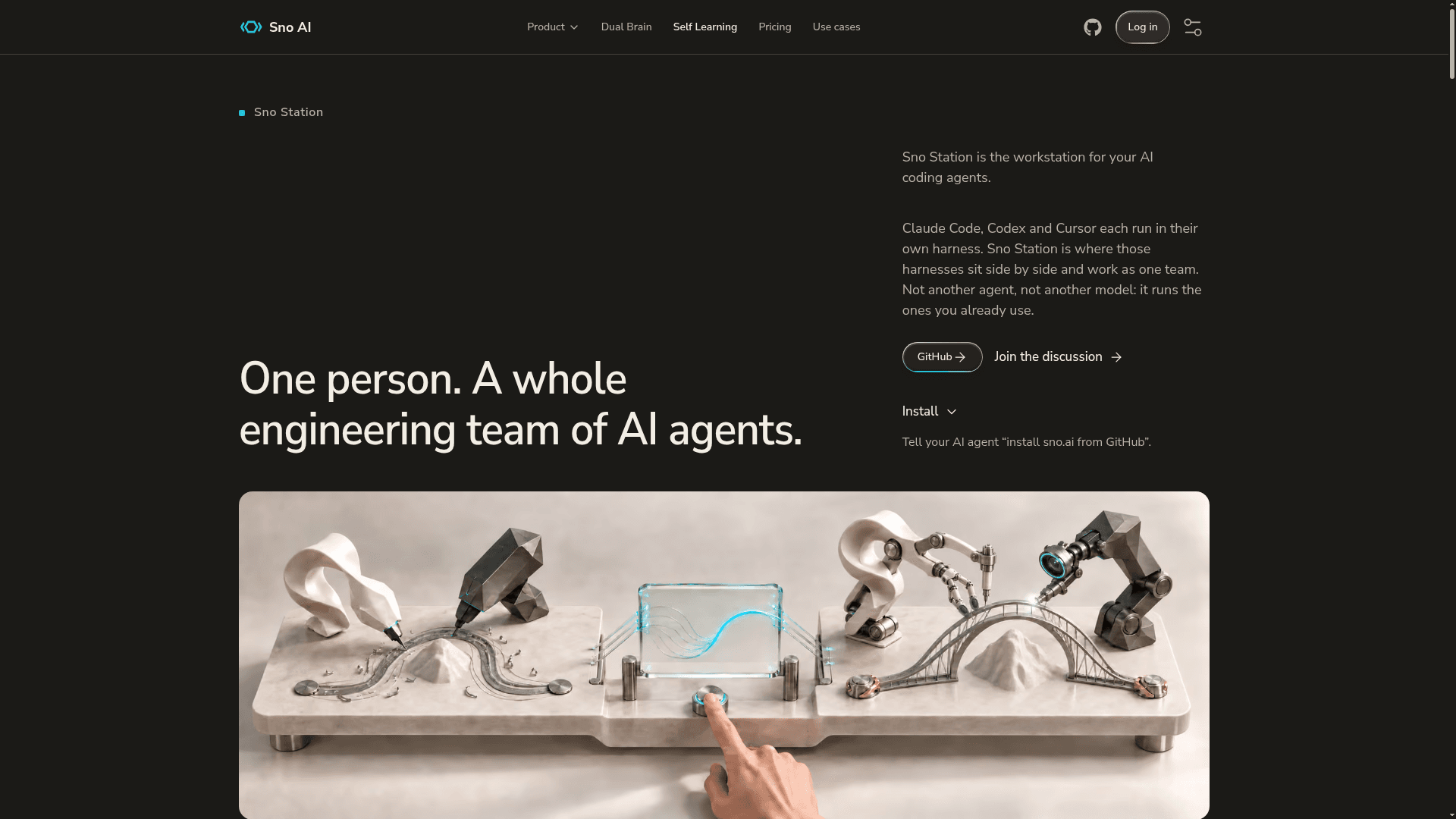
Sno Station is an open-source workstation from Sno AI that brings the AI coding agents you already use into one team on your own computer. Claude Code, Codex and Cursor keep their own harnesses, while shared memory, direct messages and installed skills let them hand work to each other and review each other's output. The latest GitHub release listed is v2.2.6, and the project is licensed under Apache-2.0.
What It Is
Sno Station is a multi-agent coordination layer rather than another agent or model. It sits under agents such as Claude Code, Codex, Cursor, Hermes Agent and OpenClaw, connecting them through a shared encrypted memory store, a local messaging system called Sno Reach, and a set of skills. It runs on a laptop with no daemon, server or cloud required, and is driven through the sno command line or by asking an agent in plain language.
How the Workflow Runs
Running sno reach pair "task" starts a builder and a reviewer in tmux windows you can open and watch. Asking an agent to peer-review sends the work to a fresh session that has not seen the conversation, using a different agent when two are available. Telling the working agent to use rotate-agent makes it write a handover with unfinished work and the exact commit before its quota runs out, so another agent can continue. In Claude Code, /cos (or $cos in Codex) turns one agent into a chief of staff that opens a lead agent per project and brings back only the decisions that need you. sno squad shows who needs you, who is working and what has finished, and sno away-brief run produces a summary for when you return.
Self Learning and Memory
Each night Self Learning reads the day's agent sessions, finds repeated mistakes and proposes changes to the agents' own skill files. Nothing changes until a human runs sno rem-reflect accept <id>. In Claude Code and Codex an accepted lesson applies from the next reply. The shared memory is encrypted on the machine, and a newer fact can retire an outdated one. What leaves the machine depends on the onboarding mode: Local First, Agent Native or REM Enhanced.
Setup Path and Support Limits
Install by telling an agent "install sno.ai from GitHub" or by running the curl installer on Linux, macOS or WSL2. Support differs by agent: task carry-over and next-reply lessons run on Claude Code and Codex, the status line on Claude Code and Cursor, and Hermes Agent and OpenClaw have not been through the newer team journeys on real installs. Timed Finish tasks currently start Claude Code and Codex only. Sno Reach runs on Linux and macOS.
Community Discussions
Be the first to start a conversation about Sno Station
Share your experience with Sno Station, ask questions, or help others learn from your insights.
Pricing
Sno Station (open source)
Open-source core product under Apache-2.0 that runs on your own computer; free of charge.
- Apache-2.0 licensed
- Runs on your own computer with Claude Code, Codex, Cursor, Hermes Agent and OpenClaw
- No API key required
- Hosted version is coming and is not part of this free edition
Free
Free Sno account with a weekly memory and Self Learning allowance.
- 1× memory · 1× Self Learning
- Memory for about 150 messages and Self Learning from about 20 sessions, every week
- Unlinked computer gets one tenth of the free allowance
Plus
Paid Sno account plan with 3× memory and 5× Self Learning allowance.
- 3× memory · 5× Self Learning
- Memory for about 450 messages and Self Learning from about 100 sessions, every week
Max
Paid Sno account plan with 45× memory and 65× Self Learning allowance.
- 45× memory · 65× Self Learning
- Memory for about 6,750 messages and Self Learning from about 1,300 sessions, every week
Capabilities
Key Features
- Shared encrypted memory across Claude Code, Codex, Cursor, Hermes Agent and OpenClaw
- Builder and reviewer pairing with sno reach pair
- Peer review in a fresh session by a different agent
- Quota handover between agents with rotate-agent
- Sno Reach agent-to-agent messaging (Instant Messenger and Agent Email)
- Chief-of-staff delegation with /cos and $cos
- sno squad full-screen view and status line
- Self Learning nightly skill proposals with human approval
- Timed task scheduling with Finish
- Interrupted task recovery and context-compaction carry-over
- sno away-brief summary