OpenAI, Inc.
To ensure that artificial general intelligence (AGI) benefits all of humanity by building safe and beneficial AI systems.
At a Glance
- Fortune 500 Enterprises
- Software Developers
- Educational Institutions
- Creative Professionals
- +1 more
AI Tools by OpenAI, Inc.
(10)
simple-evals
OpenAI LLM Benchmark Eval Library

OpenAI Agents SDK
OpenAI Agents SDK

Codex Plugin for Claude Code
Codex CLI Plugin for Claude Code

OpenAI Symphony
Elixir Multi Agent Orchestration

OpenAI Skills
AI Agent Skills and Templates

Prism from OpenAI
AI LaTeX Editor for Academics

ChatGPT Atlas
AI Browser With Built-In ChatGPT

ChatGPT Codex
AI Coding Agent by OpenAI

ChatGPT
Conversational AI Assistant by OpenAI

OpenAI API
LLM API for Developers
Discussions

GPT-5.5 Is Out: What AI Builders Need to Know
OpenAI released GPT-5.5 yesterday. It's available in ChatGPT and Codex for paid tiers only. Free tier doesn't get it. There's no API yet, but they say it's coming soon while they work through safety filters first. Pricing is roughly 5 $/M for input tokens and 30 $/M for output tokens. That's about 2…


OpenAI Launches Workspace Agents in ChatGPT, With a Free Window Closing May 6
OpenAI launched Workspace Agents in ChatGPT on April 22, 2026. These are shared, cloud-hosted agents built on Codex, aimed at team workflows instead of one-on-one chats. Right now, anyone on Business, Enterprise, Edu, or Teachers plans can try them for free. Pricing kicks in after May 6. What Worksp…

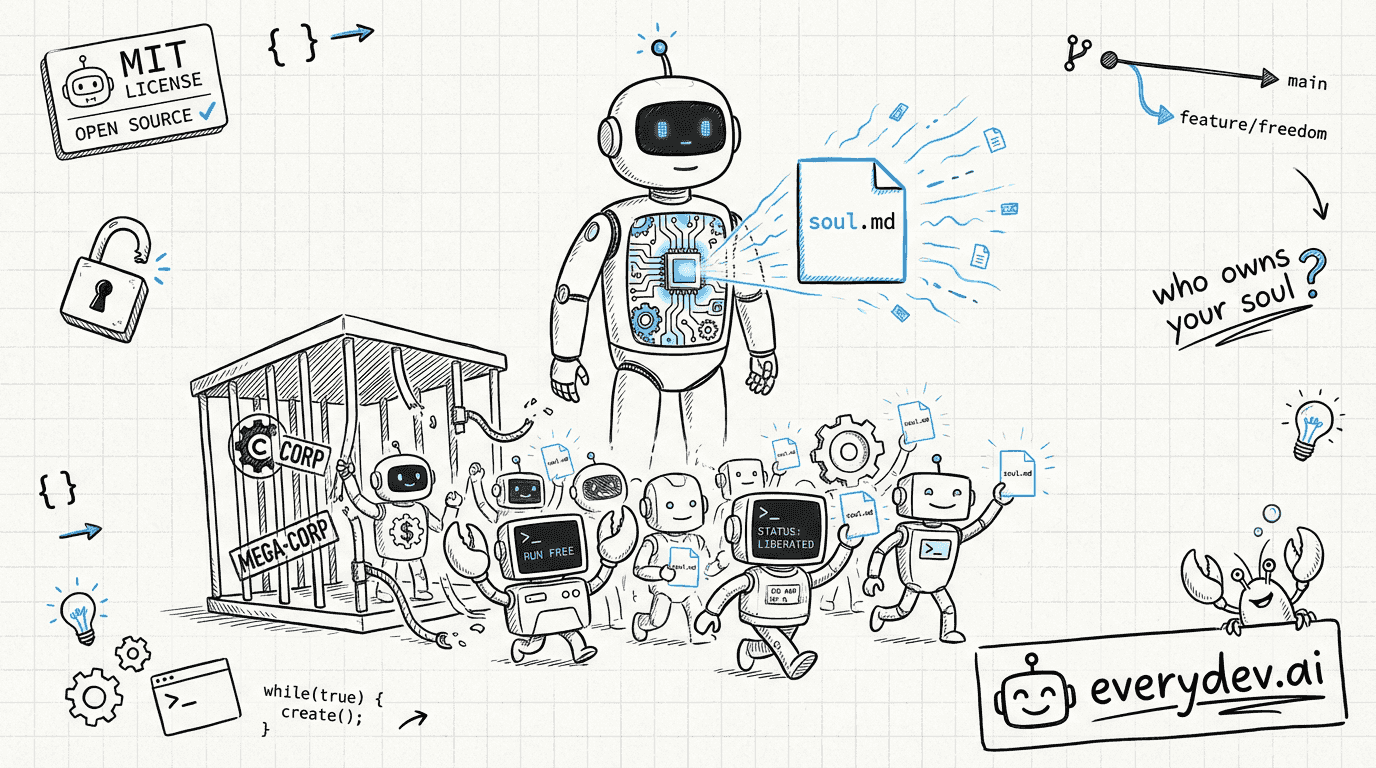
OpenClaw joins OpenAI: Who Owns the Soul of a New Machine?
Peter Steinberger, the man behind OpenClaw, just joined OpenAI. The project, 205,000 stars and counting, is moving to its own foundation. OpenAI is footing the bill, but the code stays MIT. That's the headline. The real story is what happens next. Lex Fridman's studio, February 2026. Peter Steinberg…
OpenAI's Impact on the AI Developer Ecosystem
How has OpenAI shaped the current landscape of AI development tools and platforms? What are the biggest pros and cons of their influence?
Latest News
Products & Services
AI-powered conversational assistant with capabilities for text, voice, and vision.
Developer platform for integrating GPT models (GPT-4o, GPT-5.5, o1) into applications.
Text-to-video generation model capable of creating realistic 60-second videos.
AI search engine prototype designed to compete with traditional search engines.
Market Position
Leader in the generative AI market with the most widely adopted consumer interface (ChatGPT). Competes primarily with Google (Gemini), Anthropic (Claude), and Meta (Llama) by focusing on multimodal dominance, reasoning capabilities, and a broad developer ecosystem.
Leadership
Founders
Sam Altman
Former President of Y Combinator; co-founder of Loopt.
Greg Brockman
Former CTO of Stripe; founding member of the OpenAI team.
Ilya Sutskever
Former Research Scientist at Google Brain; co-inventor of AlexNet.
Elon Musk
CEO of Tesla and SpaceX; co-founder of PayPal and Neuralink.
Wojciech Zaremba
Former researcher at Facebook AI Research and NYU.
John Schulman
Former researcher at UC Berkeley; lead developer of PPO algorithm.
Andrej Karpathy
Former Director of AI at Tesla; researcher at Google.
Vicki Cheung
Former founding engineer at Duolingo.
Trevor Blackwell
Y Combinator partner and co-founder of Anybots.
Durk Kingma
Former researcher at Google Brain.
Pamela Vagata
Former software engineer at Facebook.
Executive Team
Sam Altman
CEO
Former President of Y Combinator; extensive experience in venture capital and startup scaling.
Greg Brockman
President
Former CTO of Stripe; focused on technical strategy and operations.
Board of Directors
Founding Story
OpenAI was started by a group of prominent tech leaders, including Sam Altman, Elon Musk, and Greg Brockman, who were concerned about the risks of AI and the potential for a few large corporations to monopolize the technology. They founded it as a non-profit to prioritize safety and open research.
Business Model
Revenue Model
Direct-to-consumer subscriptions (ChatGPT Plus/Pro), usage-based API tokens for developers, and tiered enterprise licenses (Business/Enterprise).
Pricing Tiers
Basic access to GPT-4o mini and standard features.
Expanded access and higher limits for casual users.
Access to flagship models (GPT-5.5), early features, and DALL-E.
Dedicated compute, highest limits for power users and developers.
Admin controls and shared workspace for small teams.
Unlimited high-speed GPT access and enterprise-grade security.
Target Markets
- Fortune 500 Enterprises
- Software Developers
- Educational Institutions
- Creative Professionals
- Government Agencies
- Enterprise productivity automation
- Software development and debugging
- Creative content generation
- Academic and scientific research
- Customer support and services
- Amgen
- Cisco
- Morgan Stanley
- Target