
cedr
Open-source CLI that routes work to the right AI coding agent, merges multi-vendor reviews into one gate, and pins the skills and MCP servers agents load.
At a Glance
Free open-source CLI (Apache-2.0) and free app plan with no minimum developers; one member per organization.
21-day trial of Team for your first organization.
Engagement
Available On
Alternatives
Listed Oct 2026
About cedr
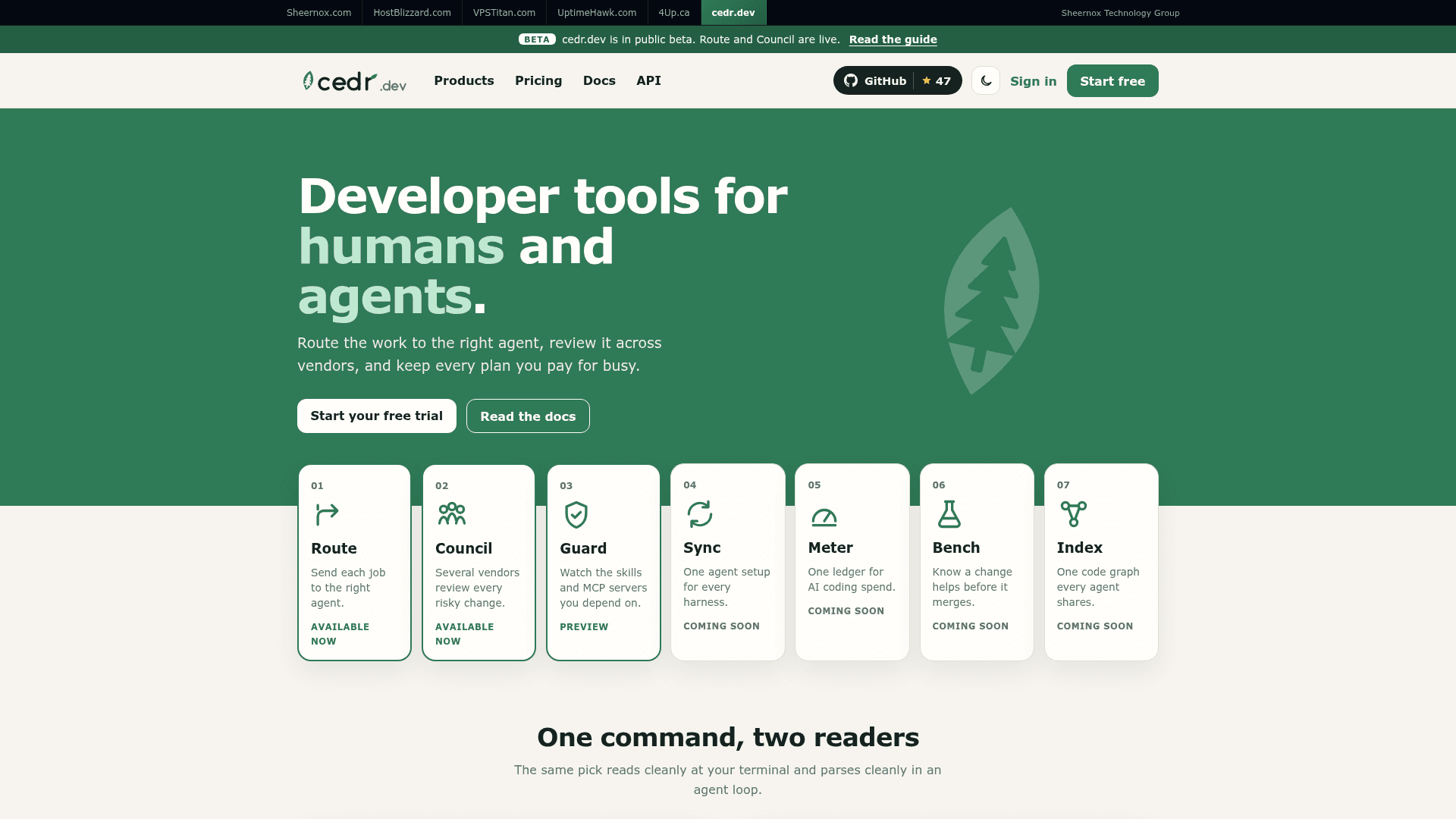
cedr is the command line tool behind cedr.dev, made by Sheernox Technology Group. It picks which AI coding agent, model and effort should take each kind of work, merges reviews from several vendors into a single pass-or-block decision, and pins the skills and MCP servers agents load. The site describes it as in public beta, with Route and Council live and Guard in preview; the README notes commands and file formats may change before 1.0.
What It Is
cedr is a developer tool for people and for the agents working beside them. The CLI works with Claude Code, Codex, Cursor and Gemini, and any agent that speaks MCP can call it directly through cedr mcp. A companion app at app.cedr.dev adds history, sharing and gates on top of the free CLI.
How Route and Council work
Route reads a routes.toml file and picks the agent, model and effort for each kind of work. Equally suited work goes to the plan with the most room left, and plans near their limits are skipped. After the work is done you record a verdict (accepted, reworked, redone or rejected), and cedr route stats shows which model performs best per kind of work.
Council starts one reviewer per vendor, merges their reports, groups findings that point at the same place and decides the gate. Any P0 or P1 finding blocks, and too few reports is never a silent pass.
Guard and pull request checks
Guard lints an agent setup, pins every skill and MCP server in .cedr/guard.lock, and fails CI when a server's tools, descriptions or network hosts change after pinning. A GitHub Action runs cedr lint and cedr verify and shows findings as pull request annotations.
Data handling
The README states cedr never reads agents' credentials and never calls a vendor API for you; plan usage comes from the agents' own status line and CLI. Picks, verdicts and stats stay local unless you configure sync with a cedr.dev API key. cedr push sends names, versions, hashes and findings, not file contents.
Roadmap
The site lists Sync, Meter, Bench and Index as coming soon.
Community Discussions
Be the first to start a conversation about cedr
Share your experience with cedr, ask questions, or help others learn from your insights.
Pricing
Free
Free open-source CLI (Apache-2.0) and free app plan with no minimum developers; one member per organization.
- Every CLI
- 30 days of route activity
- Download your routes
- Hosted MCP access included
- Free and Pro organizations have one member
Team Trial
21-day trial of Team for your first organization.
- Team features during trial
- Moves to Free when trial ends without subscription
Pro
Per developer per month, 1 developer minimum.
- Saved routes on every machine
- A year of activity
- 25 API keys
- Hosted MCP access included
- One member per organization
Team
Per developer per month, 3 developer minimum.
- Shared routes for every member
- Council merge gates
- Usage alerts
- No member limit
Business
Per developer per month, 10 developer minimum.
- Everything in Team
- SAML SSO
- Audit export
- 3 years of history
- No member limit
Capabilities
Key Features
- Route: picks agent, model and effort per kind of work from routes.toml
- Sends work to the plan with the most room left and skips plans near limits
- Records verdicts and shows per-route, per-model stats
- Council: one reviewer per vendor with merged findings, kept dissent and quorum gating
- Guard: lints agent setup and pins skills and MCP servers in a lockfile
- Fails CI when a pinned MCP server's tools, descriptions or hosts change
- GitHub Action for pull request annotations
- MCP server mode via cedr mcp
- Shell completions for bash, zsh, fish, powershell and elvish
- Optional sync of routes and history to the cedr.dev app