
Pi Pocket
A self-hosted, mobile-first, multiplayer web app for using the Pi coding agent from a browser, built on Pi Durable.
At a Glance
Self-hosted Pi Pocket web app released under the MIT License; free to use, copy, modify and distribute.
Engagement
Available On
Listed Oct 2026
About Pi Pocket
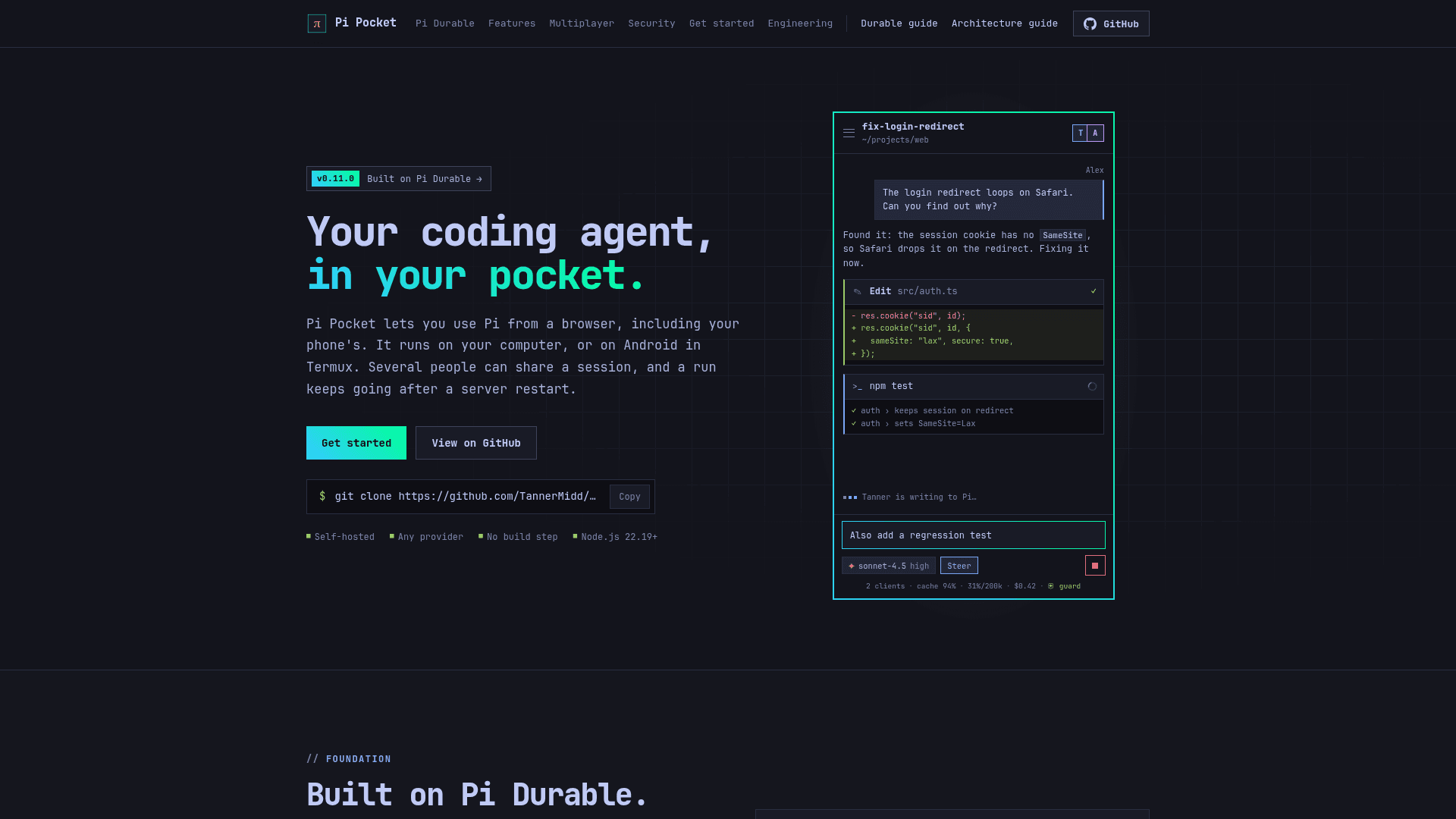
Pi Pocket is a self-hosted web app that lets you use the Pi coding agent from a browser, including a phone's. It runs on your own computer or directly on Android in Termux, and its sessions are stored in a single SQLite file. It is built on Pi Durable and is released under the MIT license; the project states it is independent and not affiliated with Earendil.
What It Is
Pi Pocket is a web front end for Pi agents. Pi Durable runs the agent, saving each step, resuming runs after a restart, queuing messages and running subagents, while Pi Pocket adds the screens, collaboration features and connection options. Users sign in to a provider through Pi, start a launcher, and open a sign-in link or scan a QR code from their phone.
Durable, shared sessions
Every model call, tool call, queued message and subagent is stored as it happens, so a run continues after a server restart. A cut-off tool call reruns only if that is safe. Several people or devices can watch and steer one session, with presence, a side chat Pi does not see, @mentions, pins, reactions, shared notes and take-turns driving. Invites use one-time links or QR codes, with steer or view-only roles.
Working with the agent
Users can steer or queue messages while Pi works, fork from any reply, use plan mode, schedule messages, and review diffs and changes. A built-in Chromium browser on the server lets Pi open, click through and screenshot pages, including localhost dev servers, while users watch the same page. Sandboxed HTML, Markdown and SVG artifacts and background subagents are supported. Extensions are live-editable with no build step.
Access and security
Four access modes are offered: local, LAN, Cloudflare Tunnel and Tailscale. Lancet Guard, off by default, makes risky bash, write and edit calls wait for approval from someone in the session. The project warns that anyone with steering rights can make Pi run commands on the host machine as the user, so invites should go only to trusted people.
Setup path
It requires Node.js 22.19 or newer: clone the repository, run npm install and npm start. Linux is the most tested platform, with macOS and Android (Termux) also supported; Windows is listed as untested for the browser feature. Pi Durable is experimental and its API can change, so versions are pinned.
Community Discussions
Be the first to start a conversation about Pi Pocket
Share your experience with Pi Pocket, ask questions, or help others learn from your insights.
Pricing
Open Source (MIT)
Self-hosted Pi Pocket web app released under the MIT License; free to use, copy, modify and distribute.
- Self-hosted; runs on your own machine or Android (Termux)
- MIT License
- Durable runs that survive server restarts
- Multiplayer shared sessions
- Any provider, any model via Pi's model runtime
Capabilities
Key Features
- Durable runs that resume after server restart
- Multiplayer sessions with presence, side chat, pins, reactions and shared notes
- Steer or queue messages while Pi works
- Forks and retries with another model
- Plan mode
- Scheduled messages and /until goals
- Any provider and model via Pi's runtime
- Mobile-first UI with push notifications and home-screen install
- Built-in server-side Chromium browser
- Sandboxed artifacts and subagents
- Diff review and git branch/worktree support
- Lancet Guard approval for risky calls
- Roles, invites and spend limits
- Live-editable extensions
- Four access modes: local, LAN, Cloudflare, Tailscale