
turri
An open-source coding agent that maintains a system definition and regenerates code from it, verifying the result with conformance tests.
At a Glance
turri itself is free and MIT licensed; users bring their own model provider and pay it for model usage.
Engagement
Available On
Alternatives
Listed Nov 2026
About turri
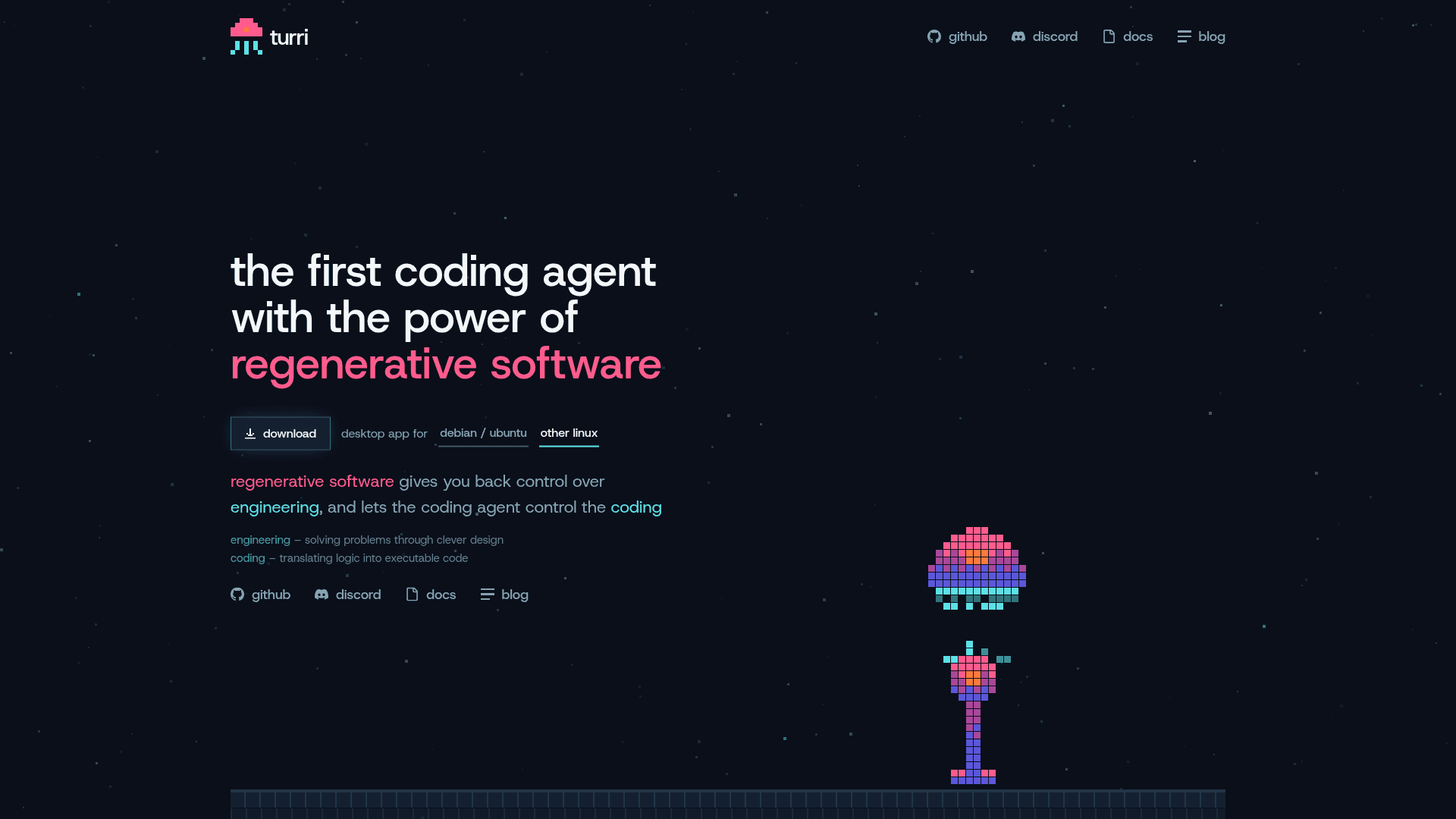
turri is an open-source (MIT licensed) coding agent built on pi. Instead of patching code prompt after prompt, it keeps a durable system definition (specs, tests and ADRs written in ***plain) and regenerates the affected code when intent changes. It runs as a CLI installed via npm and also has a separate desktop app.
What It Is
turri is a coding agent for developers who want to maintain the definition of a system rather than its implementation. You describe what you want in conversation, turri captures it as a reviewable system definition, and it generates code from that definition. The definition stays the source of truth, and tests verify that generated code conforms to it.
How the Regeneration Workflow Works
The workflow has four steps: define, review, regenerate and prove. You describe the software, review the captured definition before implementation starts, and turri generates the code from the approved definition. When requirements change, it identifies which functionalities changed and regenerates only those, though regenerating from scratch is also possible. Conformance tests derive from the definition, and the coding agent cannot change them; if validation fails, turri iterates until the implementation conforms.
Commands include regenerate, drift (how far code has moved from the definition), lineage (every generation of a module), and parse (checks ***plain syntax and structure without a model). Inside a session, a panel shows each build's stage, model and cost, and slash commands such as /halt, /lineage and /turri-config control the work.
Models and Setup
turri uses any model provider supported by pi, including Anthropic, OpenAI, Google, Amazon Bedrock, OpenRouter and local models. It uses three roles: a capable harness model you talk to, plus coding and judge models that can be smaller. Models are set per session with flags, via /turri-config, or in config.turri.yaml. It runs on macOS, Linux and WSL, with native Windows through Git Bash on a best-effort basis, and needs Git, Bash and Node.js 22.19 or newer. A Docker image is also available, and turri doctor checks the environment.
Community Discussions
Be the first to start a conversation about turri
Share your experience with turri, ask questions, or help others learn from your insights.
Pricing
Open Source
turri itself is free and MIT licensed; users bring their own model provider and pay it for model usage.
- MIT licensed open-source coding agent
- CLI via npm install -g @turri-dev/cli
- Desktop app available
- Bring your own model provider (API key or /login); model costs paid to the provider
- Shows the cost of every build as it runs
Capabilities
Key Features
- Captures intent as a reviewable system definition in ***plain (specs, tests, ADRs)
- Regenerates only the affected code when intent changes
- Conformance tests that the coding agent cannot modify
- Drift detection against the system definition
- Lineage view of every generation of a module
- Separate harness, coding and judge models
- Works with any model provider supported by pi
- Live build panel showing stage, model and cost
- Headless regeneration for unattended or CI runs
- Docker image and desktop app available