Routa
Workspace-first multi-agent coordination platform that routes software delivery work across specialist agents using Kanban boards, sessions, and MCP/ACP/A2A support.
At a Glance
Routa core platform (desktop, CLI, self-hosted web) released under the MIT License, free to use, copy, modify and distribute.
Engagement
Available On
Listed Nov 2026
About Routa
Routa is an open-source, workspace-first multi-agent coordination platform for software delivery, published by phodal on GitHub under the MIT license. It keeps goals, tasks, sessions, traces, evidence, and review state visible on a board rather than inside a single chat thread. It is available as a desktop app, an npm-installed CLI, and a self-hosted web app. The latest listed release is v0.19.0.
What It Is
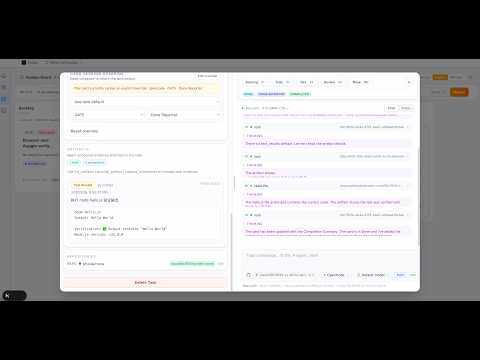
Routa is a coordination layer for AI coding agents. Work starts from a workspace with attached repositories, and is organized into explicit objects such as sessions, Kanban boards, specialists, teams, and codebases. Users can describe a goal in natural language, and Routa turns it into a workspace-scoped card that moves through specialist lanes.
How the Kanban Delivery Flow Works
Each board lane is backed by a different specialist prompt: Backlog Refiner, Todo Orchestrator, Dev Crafter, Review Guard, Done Reporter, and Blocked Resolver. The card accumulates artifacts as it moves: a canonical YAML story, an execution brief, dev evidence, review findings, and a completion summary. Downstream lanes are designed to re-validate upstream output rather than trust it. Underneath, core roles ROUTA (coordinates), CRAFTER (implements), and GATE (verifies) handle planning, implementation, and verification.
Review Gate and Harness
The README describes the delivery gate as a stacked path: Harness Monitor surfaces traces, changed files, commands, and git state; Entrix Fitness enforces hard gates, evidence requirements, and policy checks; and a Gate Specialist decides whether a card can move to Done, return to Dev, or escalate to a human.
Surfaces and Setup
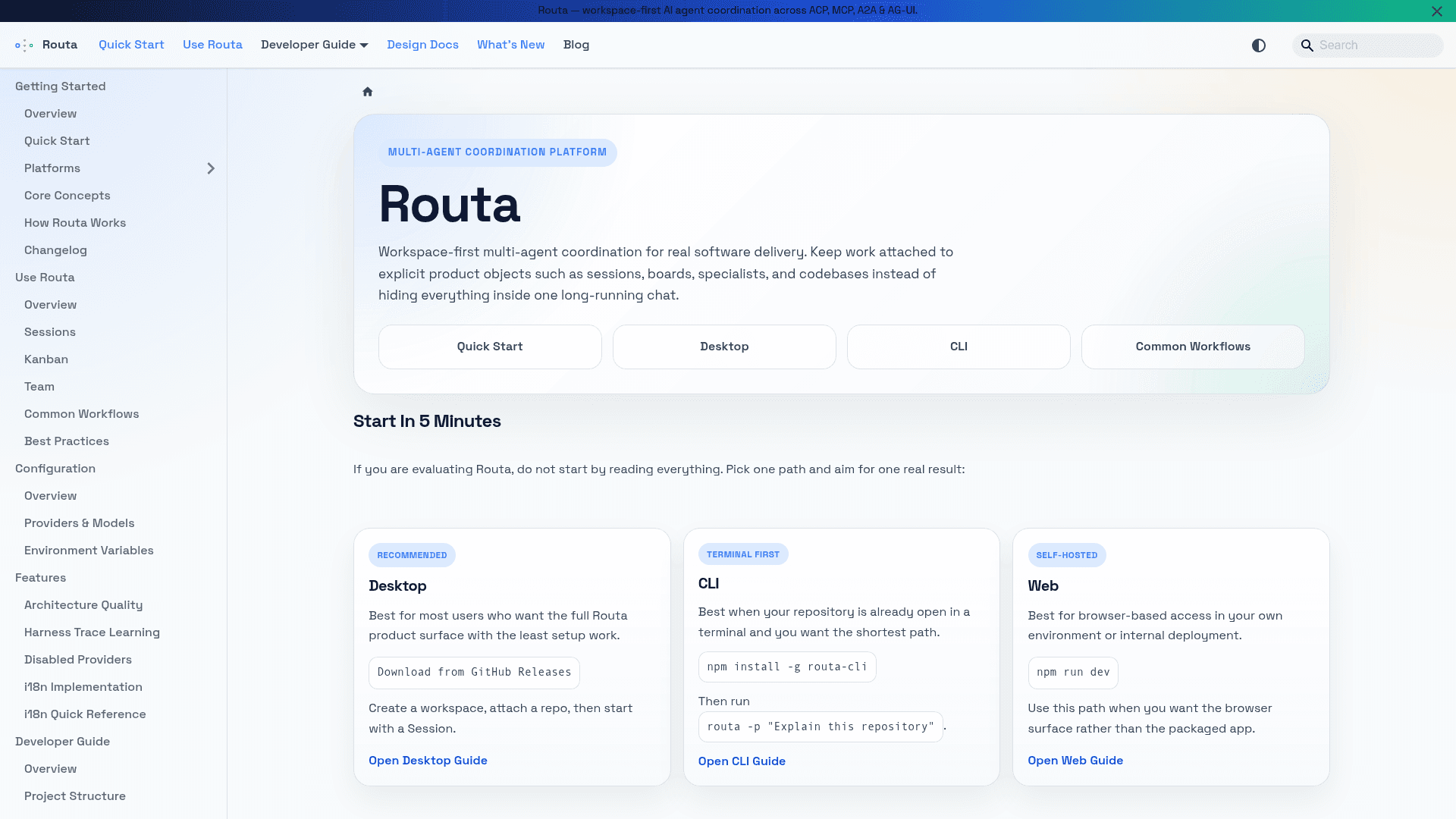
Desktop is built with Tauri over an Axum server, the CLI is installed with npm (routa-cli), and the web runtime is a Next.js app run from source or Docker. Integration surfaces include ACP, MCP, A2A, AG-UI, A2UI, REST, and SSE. Users can add MCP tools and custom MCP servers, import GitHub repositories as virtual workspaces, manage worktrees, and use schedules, webhooks, and background workflows.
Community Discussions
Be the first to start a conversation about Routa
Share your experience with Routa, ask questions, or help others learn from your insights.
Pricing
Open Source (MIT)
Routa core platform (desktop, CLI, self-hosted web) released under the MIT License, free to use, copy, modify and distribute.
- MIT License
- Desktop app via GitHub Releases
- CLI via npm install -g routa-cli
- Self-hosted web mode
- Workspace-first multi-agent coordination with Kanban, Sessions and Team
Capabilities
Key Features
- Workspace-scoped sessions, Kanban boards, team views, and codebase views
- Specialist lanes: Backlog Refiner, Todo Orchestrator, Dev Crafter, Review Guard, Done Reporter, Blocked Resolver
- Core ROUTA, CRAFTER, and GATE agent roles
- Review gate with Harness Monitor and Entrix Fitness checks
- Trace inspection and session streaming, reconnect, and cancel
- Local repository, worktree, and Git ref management
- GitHub repository import as virtual workspaces
- Custom MCP server support
- Schedules, webhooks, background tasks, and workflow runs
- Desktop, CLI, and self-hosted web modes
Integrations
Demo Video