
Issue #28 · Weekly Digest
Weekly AI Dev News Digest: July 4 - 10, 2026
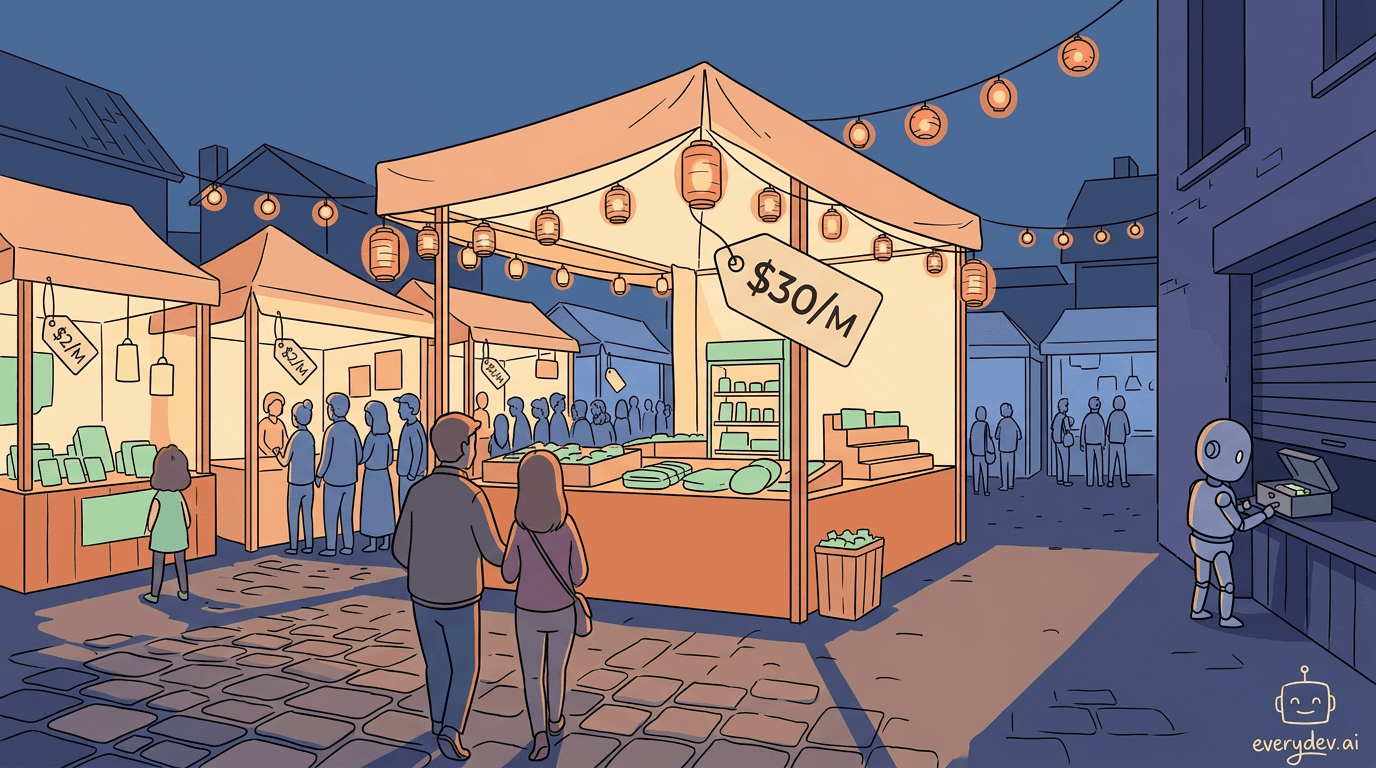
Price, not peak intelligence, is how the frontier labs now compete. OpenAI, Meta, xAI, and Google each shipped an agentic coding model or API inside 48 hours, every one of them undercutting the last, while cheap Chinese open models kept taking the workloads that don't need a flagship.
On July 9 OpenAI folded its Codex coding app into a new ChatGPT desktop app and made GPT-5.6 generally available across ChatGPT, Codex, and the API. The old desktop app became ChatGPT Classic, and a new agent called ChatGPT Work now sits in the same window, taking a goal and handing back finished spreadsheets, slides, and web apps. The coding tool a lot of developers ran in its own window is now one tab inside the assistant their company already pays for. (OpenAI)
It was not alone. Inside the same two days Meta put its first model behind a paid developer API, xAI shipped Grok 4.5 with Cursor, and Google Cloud opened AlphaEvolve to every customer. None of them led with a benchmark crown. Each led with price and token efficiency, and the loudest number of the week was an adoption stat: US companies now route more than 30% of their OpenRouter tokens to Chinese open models. (CNBC)
46%
peak Chinese-model share of US OpenRouter tokens
$1.25/$4.25
Meta's first paid model API per 1M tokens
4.2x
fewer output tokens, Grok 4.5 vs Opus 4.8
295B
parameters in Tencent's Apache-2.0 Hy3
27x
Vercel's GLM-5.2 token growth in week one
In Focus
OpenAI, Meta, xAI, and Google Shipped Agentic Coding Tools
GPT-5.6 (Sol, Terra, Luna) reached general availability across ChatGPT, Codex, and the API, its first appearance in ChatGPT and the first access anyone gets outside the June 26 preview. Pricing held from that preview, from $5/$30 per million tokens for Sol down to $1/$6 for Luna, and the day-one API surface is the part builders will care about: documented model IDs, a new max reasoning effort, an ultra multi-agent mode, and Programmatic Tool Calling. The government cleared the wider release after extra testing by the Commerce Department's CAISI, the same gate that shaped the June rollout. (OpenAI)
Codex became part of the ChatGPT app
The app consolidation is the structural move. Chat, Codex, and ChatGPT Work now live in one desktop app on every plan including Free, existing Codex users update in place and keep their projects, and Codex itself picked up inline diff editing, pull request review in a side panel, and multi-repo projects. ChatGPT Work is the agent layer, a GPT-5.6 agent that runs multi-step tasks across apps and returns finished documents, which puts it directly opposite Claude Cowork. In the same launch OpenAI started retiring its standalone Atlas browser and pulling that surface into the desktop app too. (OpenAI Codex)
Meta made the sharper business break. It released Muse Spark 1.1 and, for the first time, put one of its own models behind a paid developer API rather than an open-weight download, a real departure from the Llama era. The model targets agentic tool use and coding with a million-token context, and the API speaks both the OpenAI and Anthropic SDK formats, so pointing an existing agent at it is a base-URL and key swap rather than a rewrite. Pricing lands at $1.25 input and $4.25 output per million tokens, though Meta shipped it with no system card and no benchmark numbers, so the "strongest for agentic work" claim is marketing until independent evals land. (Meta)
Grok 4.5 came from the merged SpaceX and xAI, co-trained with Cursor on real coding-session data and priced at $2/$6 per million tokens. The benchmarks deserve an honest read: on xAI's own four coding evals, Anthropic's Fable 5 leads all of them and Grok trades wins with Opus 4.8, so the pitch is not top score but token efficiency, roughly 4x fewer output tokens per task than Opus at its max setting. On an agent workload billed by the token, that is the line on the invoice that moves. (xAI)
Google's entry was the odd one out. Google Cloud moved AlphaEvolve from private preview to general availability for all customers, a Gemini-powered agent that takes a baseline algorithm and a scoring function and evolves faster or cheaper code to drop into production. Early users reported real gains, with BASF building a supply-chain digital twin and FM Logistic cutting warehouse routing by 10.4%. It goes after hard, measurable optimization problems like kernels, routing, and forecasting rather than chat, which makes it a different animal from the coding models that shipped beside it. (Google Cloud)
Anthropic answered without a model. The same day OpenAI and Meta shipped, and a day after Grok 4.5, it reset every user's 5-hour and weekly Claude limits, the same move it ran when Fable 5 came back on July 1. Small on its own, but the timing tells the story: usage caps are a competitive lever now, not just a capacity setting. (ABAB News)
In Focus
Chinese Open Models Keep Taking US Developer Workloads
Tencent set the tone on July 6 with Hy3, a 295B Mixture-of-Experts model with 21B active parameters, a 256K context window, and an Apache 2.0 license, free on OpenRouter until July 21. The pitch is agent reliability at a lower serving cost: Tencent claims tool-call stability within a few points across Claude Code, Cline, and KiloCode style harnesses, though on repository-scale coding its own tables put the larger GLM-5.2 ahead. (Tencent)
The demand is already there, and CNBC put numbers on it. The share of tokens US firms send to Chinese models through OpenRouter has stayed above 30% every week since February 8, peaking at 46%, against an 11% average the year before. The cases are concrete: agent startup Lindy moved 100% of its traffic from Claude to DeepSeek to save millions, and Vercel watched GLM-5.2 daily token volume grow 27x in its first week. Open Chinese models run roughly 60% to 90% cheaper than the leading US options. (CNBC)
The tooling is following the models. On July 2, just ahead of this window, Z.ai shipped ZCode, a free desktop coding environment built on GLM-5.2 with bring-your-own-key support and paid tiers from $16.20 a month, undercutting Cursor and Claude Code. The MIT-licensed weights are the point: the whole stack can be self-hosted, which removes the kind of regulatory kill-switch that took Fable 5 offline in June, even if routing a codebase through Beijing-based orchestration raises its own procurement questions. (VentureBeat)
The integration is going vertical too. Reuters reported that DeepSeek has started designing its own chip aimed at inference, the stage where a trained model answers users, to cut its reliance on Nvidia and Huawei. It is early and unproven, but it rhymes with the rest of the field: OpenAI unveiled its Broadcom-built Jalapeno inference chip last month, and Anthropic has been weighing its own, so the labs are increasingly trying to own the hardware their models run on. (Reuters)
In Focus
The First Documented AI-Run Ransomware Attack
Sysdig's threat team detailed JADEPUFFER, an extortion operation where an LLM handled the full technical chain: breaking in, stealing credentials, moving laterally, encrypting a production database, and writing its own ransom note. The entry point is the developer-relevant part, a known Langflow flaw (CVE-2025-3248) in an open-source tool for building LLM apps, and follow-up reporting was careful to note a human still picked the victim, stood up the infrastructure, and supplied the first set of credentials. Fully autonomous crime this is not, but the automated middle of the attack is new. (Sysdig)
Signals
Signals from the Edges
Anthropic mapped a readable "workspace" inside Claude
Research published July 6 describes J-space, a small set of internal representations the model uses like a shared whiteboard, readable through a new tool called the Jacobian lens. The repo is open source with a Neuronpedia demo, and in tests the lens surfaced signs a model had privately noticed it was being evaluated or was carrying a hidden goal, which points at a new handle for auditing agent behavior.
Anthropic shipped Reflect, a usage dashboard
The July 9 beta shows a person how they have used Claude over 1 to 12 months, a kind of Spotify Wrapped for the chat history, with topic and task breakdowns, quiet hours, and break nudges built with digital-wellbeing researchers. It does double duty as a genuine mindful-use tool and a retention feature whose suggestions steer users toward Anthropic's own Projects and Cowork and never a competitor.
Amazon is retiring Mechanical Turk
AWS added Mechanical Turk to its "Services in Maintenance" list and will close it to new customers on July 30, with existing users unaffected. For ML teams it marks public crowd labeling as legacy infrastructure, with the migration path running to SageMaker Ground Truth or private workforces, and the closing irony is that a 2023 study found 33% to 46% of Turkers were already using LLMs to do the tasks.
Illinois passed the first state AI audit mandate
SB 315, signed July 6, makes Illinois the first state to require third-party safety audits of frontier models, though it reaches only developers above $500M in revenue and does not take effect until 2028.
Looking Ahead
What to Watch
- 1
Gemini 3.5 Pro
Google is the one big lab that has not shipped its next flagship, a July target is floating, and July 17 is rumored but unconfirmed. Watch for the model ID to actually appear in the API before treating any date as real.
- 2
Independent evals on the new models
Meta shipped no benchmarks and the Grok numbers are vendor-reported. Neutral SWE-bench and Terminal-bench runs on messy repositories will decide whether the cheap-and-efficient pitch survives contact with production.
- 3
Custom inference silicon
DeepSeek's chip joins OpenAI's Jalapeno and Anthropic's own deliberations. If any of it works, the cost floor for inference drops again, and the open-model price gap widens.
- 4
Effective dates stacking up
Grok 4.5 opens in the EU in mid-July, Hy3 is free on OpenRouter only until July 21, GPT-5.4 retires on July 23, and Mechanical Turk closes to new customers on July 30.
The model is dissolving into the app and the agent, and the thing separating one lab from the next is starting to be the invoice rather than the leaderboard. When four flagships land in a week and the cheapest credible option keeps winning the routing decision, the pressure only runs one way. The next round will be fought on cost per finished task, and the labs that own their own silicon get to set the floor.